


- How I compared the best affiliate marketing software
- 1. Rekomi: best overall for growing SaaS companies
- 2. Rewardful: best for Stripe-first SaaS companies
- 3. FirstPromoter: best for detailed commission rules
- 4. PartnerStack: best for B2B partner ecosystems
- 5. Tapfiliate: best for mixed SaaS and ecommerce sales
- 6. impact.com: best for enterprise partnership programs
- 7. Dub Partners: best for link-first partner programs
- 8. Tolt: best for lean SaaS teams
- 9. Trackdesk: best for established affiliate programs
- 10. Post Affiliate Pro: best for complex commission structures
- 11. LeadDyno: best for smaller ecommerce teams
- How to test affiliate management software before you buy
- How affiliate tracking software works
- 11 affiliate marketing platforms compared at a glance
- Conclusion: which affiliate marketing platform is best for SaaS?
- Frequently asked questions
- More in this affiliate marketing series
The best affiliate payout platform for SaaS is one that automates recurring commission payments and handles multiple currencies without manual chasing. I switched providers after spending hours each month reconciling PayPal payouts by hand, and a dedicated system cut that to minutes. Look for built in tax form collection, bulk payout options, and clear affiliate dashboards showing pending versus paid amounts. Platforms that integrate directly with your billing tool avoid the spreadsheet errors that cost me real money in year one.
11 Best Affiliate Marketing Platforms for SaaS in 2026
In this blog post, I am comparing 11 of the best affiliate marketing platforms for SaaS. I looked at current pricing, payment integrations, recurring commission support, payouts, fraud controls and the amount of work each platform leaves with your team after launch.
Rekomi is my top overall choice for a growing SaaS business because it combines recurring revenue tracking, flexible commission rules, fraud screening, tax handling and managed global payouts at a sensible starting price. Rewardful and FirstPromoter cover narrower SaaS setups well. PartnerStack and impact.com make more sense once you have a larger partnerships team and need the extra machinery.
If you are starting from scratch, read my guide to creating an affiliate program that pays for itself first. It will help you decide what the software needs to do before a demo persuades you to buy features you will not use.
Selling through ecommerce as well as SaaS? My comparison of the best Shopify affiliate apps and ecommerce affiliate software covers product-level commission, coupon attribution and hybrid revenue models.
If your checkout runs on WordPress or WooCommerce, my separate comparison of the best WordPress affiliate plugins covers the plugin-based options in more detail.
If you need the model before the software, my affiliate marketing guide for small businesses covers the relationship between the brand, the partner, the tracked sale and the commission.
If you are choosing programs from the creator side, my guide to recurring affiliate programs explains how commission duration, attribution and payout terms change what a recommendation is really worth.
How I compared the best affiliate marketing software
I compared every platform against the same five areas:
Payment-stack coverage: does it connect to the billing system that knows about the sale, renewal, upgrade and refund?
Tracking reliability: can it handle links, coupons, recurring payments, cross-device journeys and repeat purchases?
Payout and tax handling: does the platform move the money and collect the paperwork, or merely calculate what you owe?
Fraud protection: can you catch self-referrals, suspicious traffic and commission that should never be approved?
Pricing transparency: can you calculate the full cost at your target sales and payout volume?
The best affiliate marketing software needs to fit the way you charge customers and the way you plan to pay partners. When you compare SaaS affiliate software, renewals, upgrades, cancellations and refunds matter as much as the first sale.
I also included the time your team will spend approving partners, checking commission and preparing payouts. A cheaper subscription can cost more overall if it creates several hours of manual work every month.
The same principle applies when choosing between marketing tools that look similar: compare the work you will do after buying, as well as the feature list.
If you want the wider strategy as well as the software decision, my step-by-step affiliate marketing guide covers choosing programs, creating content and turning recommendations into revenue.
1. Rekomi: best overall for growing SaaS companies
Rekomi earns the top position because it solves the whole operating job at a low entry price. It handles affiliate tracking, campaign management, fraud checks, tax forms and global payouts in one platform, instead of leaving the awkward parts for your team or another paid service.
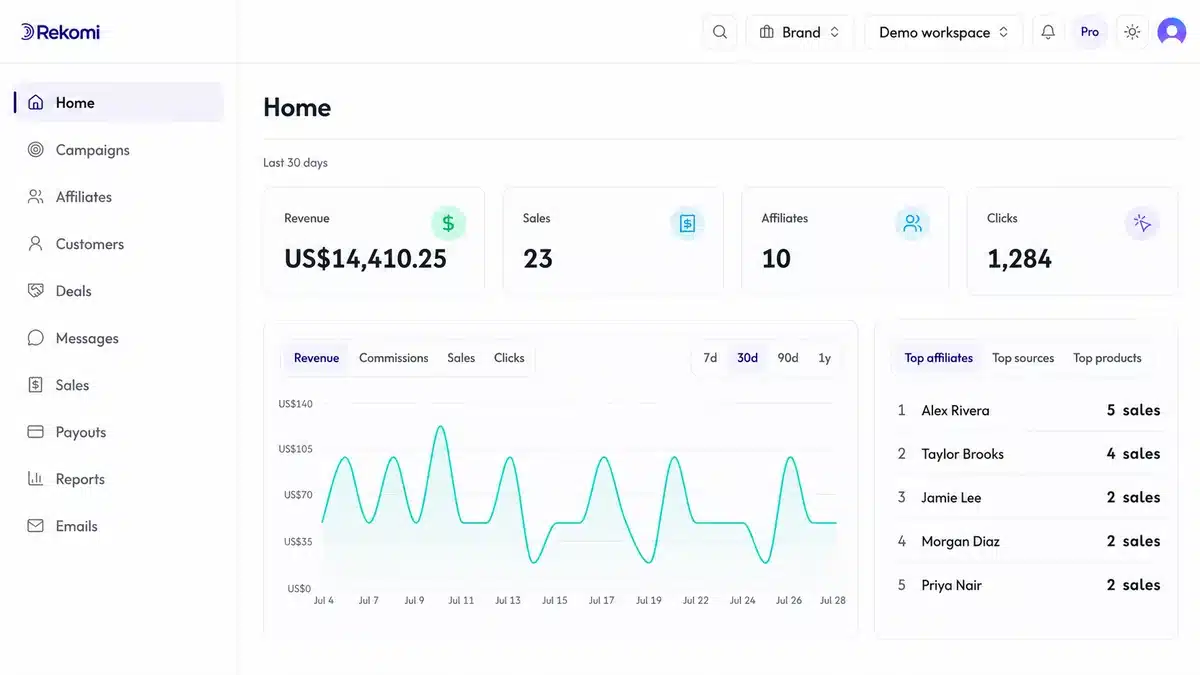
Standout features. Rekomi brings affiliate tracking software, coupon attribution, commission rules, partner management, fraud screening, tax workflows and managed payouts into one product. It lists 12 payment integrations, plus API and Zapier options. It supports recurring and one-time commission, reverses commission when revenue is refunded, gives every program a hosted signup page on a branded subdomain and can import affiliates from 21 other platforms for free. A team can run the program without adding separate tracking, payout or tax tools. Rekomi's Stripe integration is also listed as an official app in the Stripe App Marketplace, which gives buyers a useful primary-source trust check.
Rekomi also supports ecommerce brands, agencies, courses and memberships. Creators, newsletter writers, podcasters and influencers use the partner side. That gives a growing business room to add new products and partner types without replacing the affiliate platform.
Before you build the campaign, use my affiliate commission structure cheat sheet to choose a rate your gross margin and refund rate can support.
Limitations. Rekomi is newer than the established names, so it has fewer independent public reviews. Managed payouts cost 3% of affiliate payouts, or 2.5% on Enterprise. Test the core workflow during the 14-day trial and include the payout fee in your forecast.
Pricing. $29 a month for Starter, $49 for Growth and $99 for Pro. Every public plan includes payout and tax workflows. Rekomi does not offer a free plan, but it has a 14-day free trial.
Best for. SaaS and subscription businesses that want the full affiliate operation in one place. It also suits agencies and hybrid SaaS and ecommerce brands that do not want to rebuild the program when the business model expands.
You can check Rekomi's affiliate software for SaaS against your own billing stack and payout forecast.
2. Rewardful: best for Stripe-first SaaS companies
Rewardful is focused, easy to understand and built for subscription businesses using Stripe or Paddle. That restraint is part of the appeal. It tracks links and coupons, supports recurring commission and gives affiliates a branded portal without trying to become your whole partnerships department.
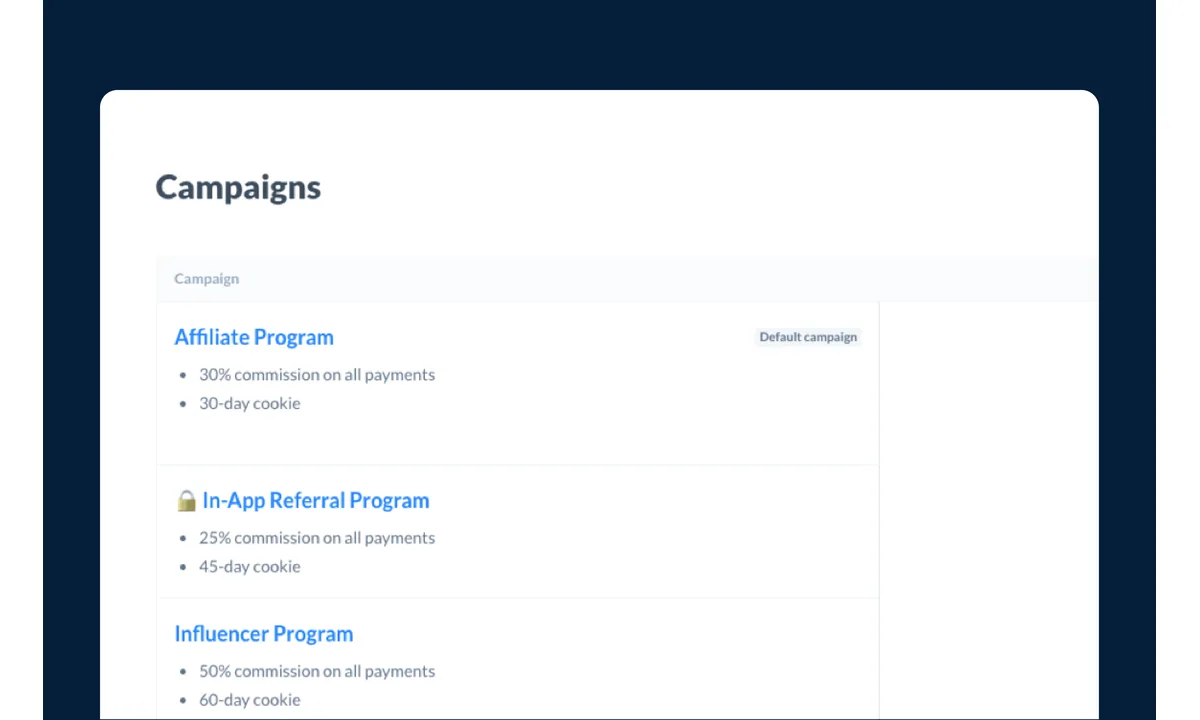
Standout features. Two-way Stripe sync, automatic refund adjustments, campaign-level commission rules and a choice between first-touch and last-touch attribution cover the needs of many early SaaS programs.
Limitations. Rewardful only supports Stripe and Paddle. The standard workflow leaves your team preparing PayPal or Wise mass payments, and managed payouts add 3%. If your billing stack changes or you add another revenue model, the clean setup can become a migration project.
Pricing. $49 a month for Starter, $99 for Growth and $149 or more for Enterprise.
Best for. A small Stripe-first SaaS team that wants a clean tracker and does not mind owning some of the money movement.
3. FirstPromoter: best for detailed commission rules
FirstPromoter has been around long enough to understand the odd little things SaaS businesses ask affiliate software to do. It tracks subscriptions, upgrades, cancellations and refunds, supports campaign segmentation and gives you far more control than a basic referral widget.
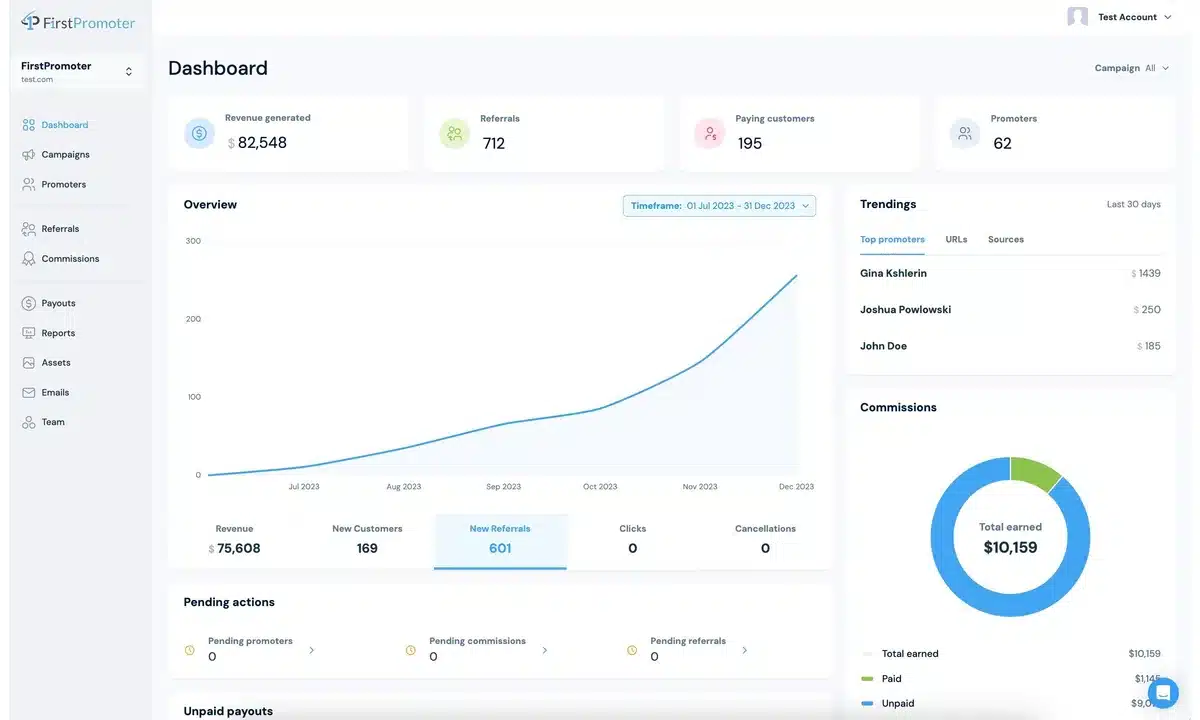
Standout features. It supports Stripe, Paddle and Chargebee, direct URL tracking, coupon codes, individual rewards, 18 reporting data points and fraud detection. The affiliate portal can be deeply branded or embedded inside your own app.
Limitations. Lower plans are tied to affiliate-generated revenue bands, so success can force an upgrade. PayPal and Wise mass payouts still need your team to prepare the payment file. Fully managed automatic payouts sit at Enterprise, and the deeper controls create more setup and more room for somebody to misconfigure the campaign.
Pricing. $49 a month for Starter, $99 for Business and $149 or more for Enterprise.
Best for. A SaaS team with detailed campaign rules and a person who will learn what all the controls do.
4. PartnerStack: best for B2B partner ecosystems
PartnerStack now has two distinct offers. Spark is the entry product for a simple Stripe referral program. The full platform covers affiliates, referrals, resellers and co-sell partners, with a large B2B network, onboarding workflows, CRM connections and consolidated partner payments.

Standout features. Recruitment and partner operations live beside tracking and commission. That matters when you are running several partner motions and need one record of leads, revenue, rewards and lifecycle stages.
Limitations. Spark supports one user, simplified links, simple commission offers and Stripe sales. It excludes the PartnerStack Network and charges 10% of every commission you pay, which becomes expensive as the program works. The full platform unlocks the network and advanced partner motions, but the subscription and PartnerStack payout fee are quote-only. That makes a proper annual cost comparison impossible without a sales process.
Pricing. Spark costs $0 a month plus 10% of commissions paid. The full PartnerStack platform uses custom pricing and an undisclosed percentage fee on partner commissions.
Best for. A B2B company with a partnerships team, several partner types and enough revenue to justify the machinery.
5. Tapfiliate: best for mixed SaaS and ecommerce sales
Tapfiliate sits comfortably between SaaS and ecommerce. It supports recurring, lifetime, fixed and percentage commission, branded affiliate pages and more than 30 integrations. That makes it useful when sales do not all happen through one tidy billing route.
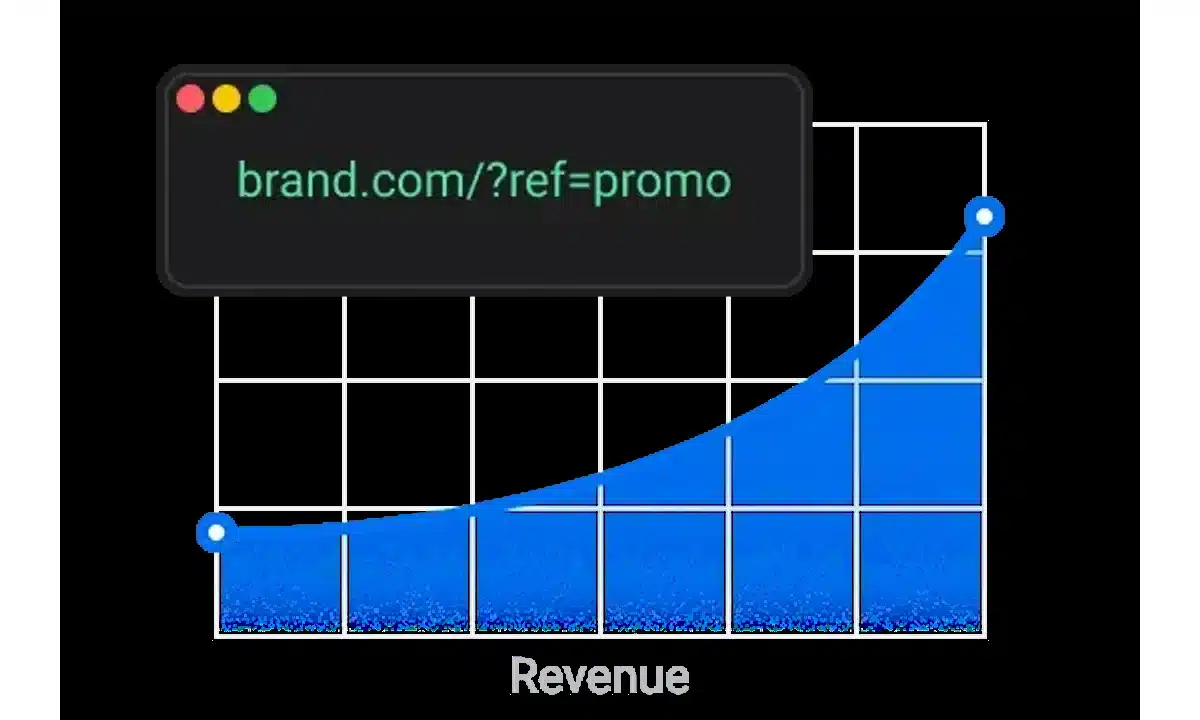
Standout features. Flexible commission, coupon and offline attribution, segmentation and sub-ID reporting give an operator room to run different kinds of promotion inside one program.
Limitations. Automated payouts through Trolley begin on the $179 Scale plan, so the $89 entry price does not buy the hands-off payout operation. Lower tiers also cap clicks, conversions and programs. A busy campaign can trigger overages or an upgrade before it has produced enough profit to justify either.
Pricing. $89 a month for Launch and $179 for Scale.
Best for. A business running SaaS, subscription or ecommerce sales across several channels.
6. impact.com: best for enterprise partnership programs
impact.com manages affiliates, creators, referrals and wider partnerships. It covers discovery, contracting, tracking, engagement, payments, protection and reporting, which makes it broader than a standard affiliate tracker.
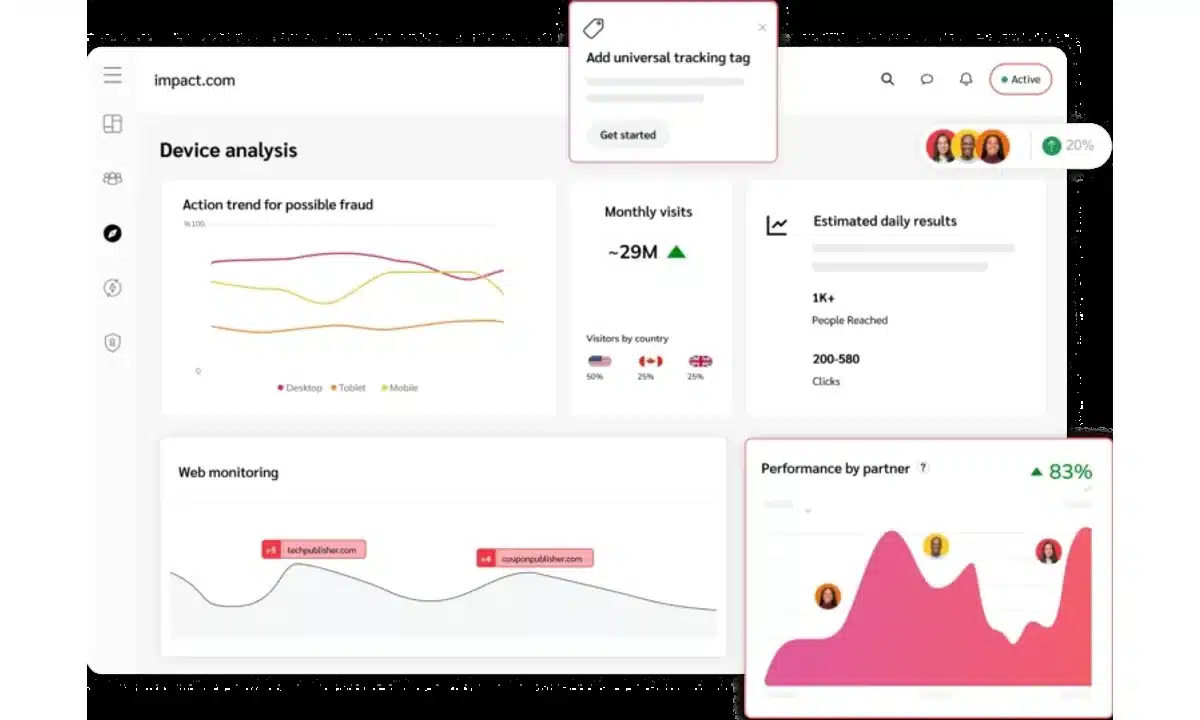
Standout features. Cross-device tracking, contracting, automated workflows, partner discovery and advanced fraud and attribution controls can replace several disconnected systems for a large organisation.
Limitations. The $30 Starter plan is not the enterprise product described above. The next published plans jump to $500 Essentials and $2,500 Pro, and several advanced controls sit higher up the ladder. A smaller SaaS company can pay for contracting, discovery and workflow breadth it has no staff to use.
Pricing. $30 a month for Starter, $500 for Essentials, $2,500 for Pro and a custom Enterprise tier.
Want AI doing the heavy lifting in your marketing?
I build the systems that handle the boring 80 percent, so you get your week back. Done properly, with the human kept in.
Best for. An established company running several partnership channels with compliance, reporting and internal operators to match.
7. Dub Partners: best for link-first partner programs
Dub grew from link management into a polished partner platform. It combines link infrastructure, attribution, commission analytics, global payouts and tax compliance in an interface product-led teams will enjoy using.
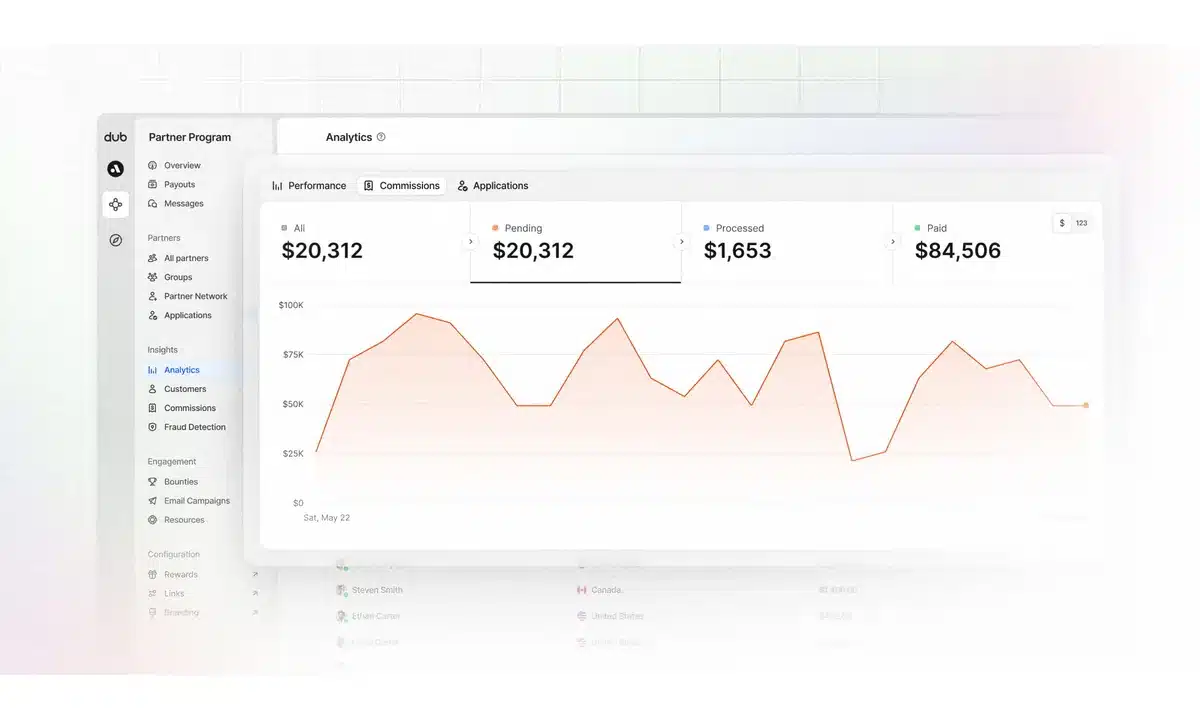
Standout features. Links and partner data live in the same system, with flexible commission types and a modern experience for both the operator and the partner.
Limitations. Business and Advanced carry a 5% payout fee. A brand paying $20,000 a month in commission would spend $1,000 a month on that fee before the subscription. The interface and link infrastructure need to earn back that cost.
Pricing. $90 a month for Business and $300 for Advanced. Enterprise is custom and carries a 3% payout fee.
Best for. A team already using Dub for links, or one willing to pay more for strong link infrastructure and partner experience.
8. Tolt: best for lean SaaS teams
Tolt is built specifically for SaaS startups. It connects with Stripe, Paddle and Chargebee, tracks subscription changes and refunds, and gives affiliates a branded portal without an enterprise implementation project arriving with it.
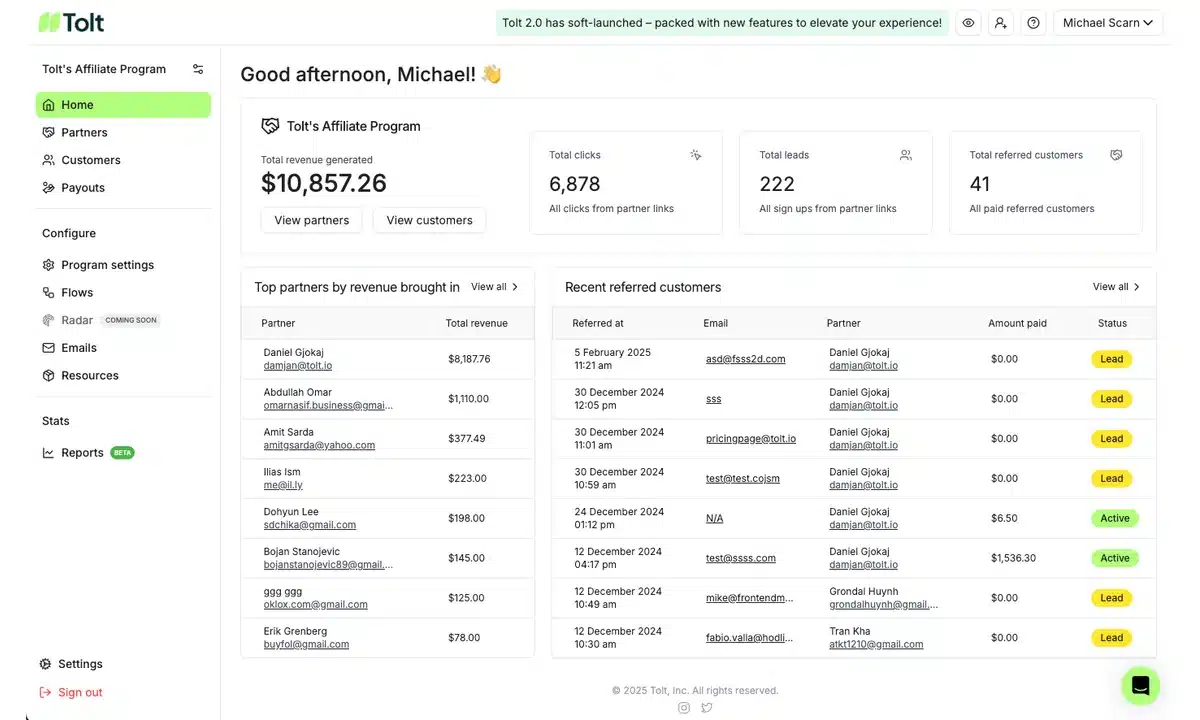
Standout features. The billing fit is clear, setup is light and the product supports percentage or fixed commission, manual approval, cross-subdomain tracking and custom email notifications.
Limitations. The $69 Basic plan leaves payouts with your team. Automatic payouts begin on Growth and add a 2% processing fee. Stripe, Paddle and Chargebee cover many SaaS businesses, but a new processor, ecommerce offer or unusual billing path can put you outside the native setup.
Pricing. $69 a month for Basic, $99 for Growth and $199 for Pro.
Best for. A lean SaaS company using Stripe, Paddle or Chargebee that wants a focused platform with a lighter setup.
9. Trackdesk: best for established affiliate programs
Trackdesk is built for teams that already know affiliate is a serious channel. It offers a customisable dashboard, more than 100 integrations, tracking, reporting, affiliate management and payout preparation.
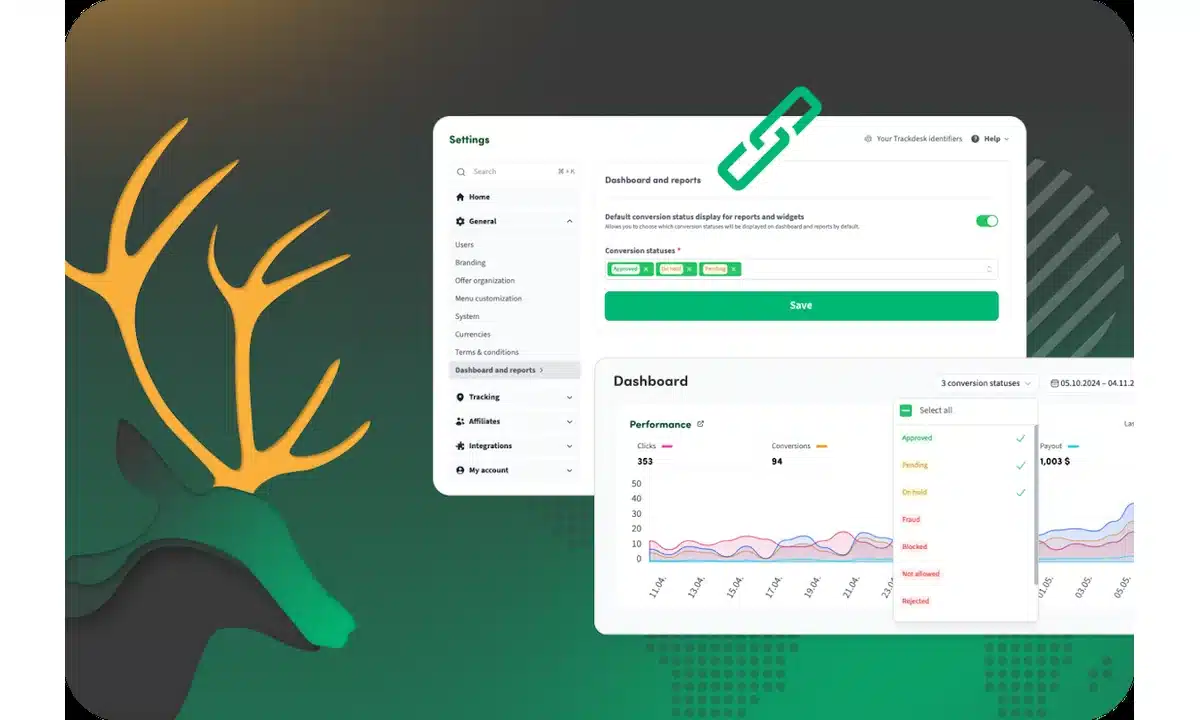
Standout features. Operators get flexible data views, high-volume capability, integrations and affiliate access without the click and conversion caps found on some cheaper plans.
Limitations. The $329 monthly subscription starts before the first affiliate earns anything. Trackdesk prepares payouts rather than removing the full payment and tax job. A new program can end up paying established-channel prices while the team still handles the least enjoyable admin.
Pricing. $329 a month for Business, $499 for Enterprise and $1,199 or more for Enterprise Plus.
Best for. An established affiliate program with volume, budget and somebody already responsible for it.
10. Post Affiliate Pro: best for complex commission structures
Post Affiliate Pro has deep configuration, more than 125 plugins, advanced reports and fraud controls. It is one of the longest-established products in this comparison and suits programs with unusual commission or tracking requirements.

Standout features. Recurring, lifetime, split and multi-tier commission, broad integrations and detailed controls make it a fit for unusual or heavily managed programs.
Limitations. The setup is heavier than newer SaaS-first tools, payouts remain hands-on and plans include tracking-request limits. A team can spend more time maintaining the system and watching traffic allowances than recruiting affiliates. The flexibility only pays off when the program needs unusual rules.
Pricing. New-user promotional pricing is currently $60 a month for Starter, $93 for Pro, $180 for Ultimate and $435 for Network until 1 January 2027. The regular monthly prices are $89, $139, $269 and $649.
Best for. A team with complex rules, a hands-on operator and no fear of a settings menu with several floors.
11. LeadDyno: best for smaller ecommerce teams
LeadDyno covers tracking, affiliate recruitment, fraud prevention, social sharing and program reporting. It can support SaaS, but the shape of the product and its integrations still make the most sense for a smaller ecommerce-led program.
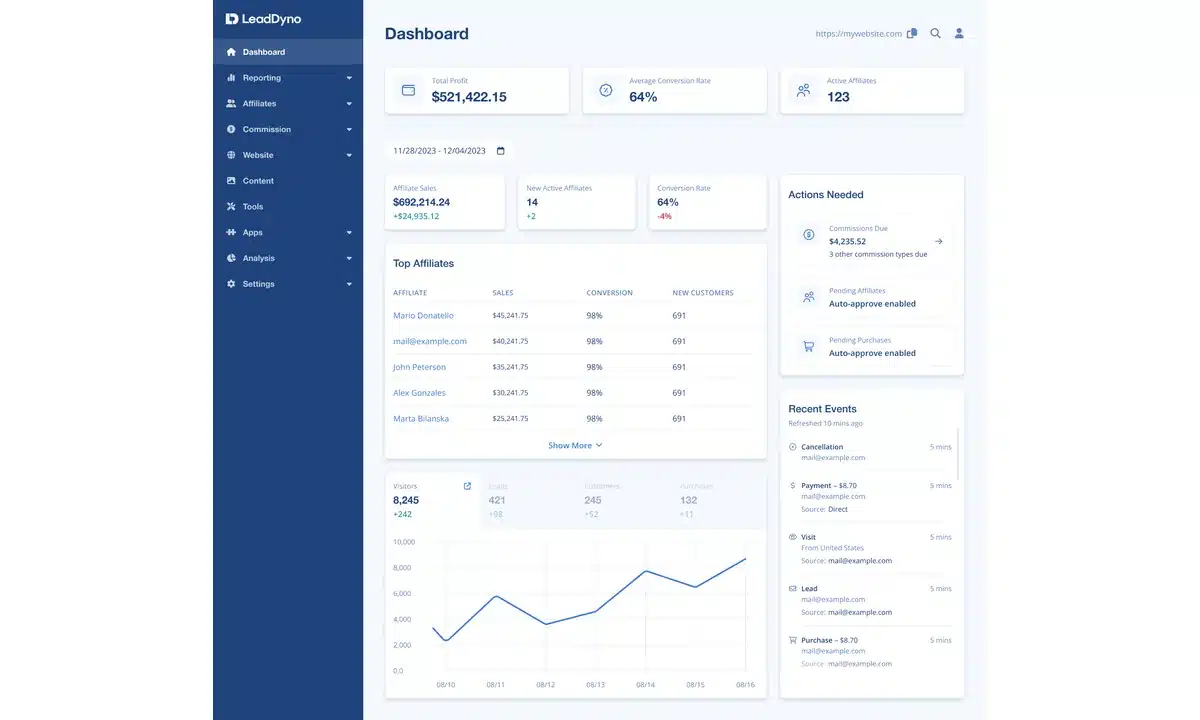
Standout features. The dashboard makes performance and pending actions easy to find, while the plan structure gives growing brands a clear route through affiliate limits.
Limitations. Affiliate limits increase with each plan. Lite allows 50 affiliates, Essential 150 and Advanced 500, so recruiting more people can force the price from $49 to $129 or $349 even if most of those affiliates never produce a sale. SaaS teams also get a product shaped more around ecommerce than subscription operations.
Pricing. $49 a month for Lite, $129 for Essential, $349 for Advanced and $749 for Unlimited.
Best for. A smaller ecommerce brand that wants a known product and a clear view of what needs attention.
How to test affiliate management software before you buy
Run the same practical tests in every product you shortlist. A standard demo will rarely show you what happens when tracking or commission becomes complicated.
Create a test partner. Click the link. Buy a discounted monthly plan. Upgrade it. Trigger a renewal. Refund part of the payment. Cancel. Then open the partner statement and check who received credit, how much commission appeared and whether the refund reversed it.
Test a coupon without the link, change device and put two partners into the same customer journey. Export the payout report and ask somebody who did not configure the platform to explain one commission line. If the report is unclear during a test, it will be harder to resolve after the program grows.
My affiliate program launch checklist covers the tracking, terms, onboarding and test-sale checks I would run before inviting anybody.
How affiliate tracking software works
Affiliate tracking software usually gives each partner a unique link or coupon. A click creates a referral record, the billing integration reports the payment and the platform applies the attribution and commission rules. Good software also records renewals, upgrades, refunds and cancellations so you pay commission on money you kept.
The trouble arrives between those neat steps. Cookies expire. Buyers switch devices. Somebody finds a coupon after clicking another partner's link. The first payment tracks, then a renewal comes through a billing event the platform was never configured to receive.
Rekomi's guide to how affiliate tracking software works explains links, cookies, coupon attribution and server-side billing events in more detail.
Tracking is only half the job. The platform must calculate commission, hold it through the refund period, collect payment details and produce a statement both sides can understand. Check the complete process from the first click to the final payout.
11 affiliate marketing platforms compared at a glance
You have now seen what each platform gives you and what it leaves with your team. This table puts the main differences in one place without asking six columns to do the work of the full review.
| Tool | Best for | Starts at | Payment integrations | Payouts included | Fraud protection |
|---|---|---|---|---|---|
| Rekomi | SaaS and subscription brands | $29/mo | 12 plus API and Zapier | Yes, 3% fee | Built in |
| Rewardful | Stripe-first SaaS | $49/mo | Stripe and Paddle | Optional, 3% fee | Self-referral checks |
| FirstPromoter | Detailed SaaS rules | $49/mo | Stripe, Paddle, Chargebee | Enterprise | Built in |
| PartnerStack | B2B ecosystems | Spark $0 + 10% | Stripe on Spark | Yes | Not specified on Spark |
| Tapfiliate | Mixed sales channels | $89/mo | 30+ integrations | Scale plan | Controls vary by plan |
| impact.com | Enterprise partnerships | $30/mo | Broad enterprise stack | Yes | Advanced on higher tiers |
| Dub Partners | Links and design | $90/mo | Billing and commerce stack | Yes, 5% fee | Built in |
| Tolt | Lean SaaS teams | $69/mo | Stripe, Paddle, Chargebee | Growth, 2% fee | Core controls |
| Trackdesk | Established programs | $329/mo | 100+ integrations | Payout preparation | Built in |
| Post Affiliate Pro | Complex rules | $60/mo promo | 125+ plugins | Self-managed | Advanced controls |
| LeadDyno | Smaller ecommerce teams | $49/mo | Commerce-led stack | Self-managed | Built in |
Prices and plan details change. These figures come from the official product pages checked for this comparison. PartnerStack Spark publishes its price, while the full PartnerStack platform still requires a custom quote.
If you've built a tool, here are the AI tool directories worth listing it on.
Conclusion: which affiliate marketing platform is best for SaaS?
Rekomi is the strongest overall option for a growing SaaS or subscription business because it covers the parts most alternatives split apart: broad billing support, first-party and coupon tracking, commission rules, fraud screening, tax forms and global payouts. The $29 starting plan and 3% payout fee are easy to model before you commit.
Rewardful is a sound fit for a smaller Stripe or Paddle setup if your team is happy to own some payout work. FirstPromoter gives you more controls, with more settings and higher-tier dependencies. PartnerStack and impact.com earn their place when you need several partner motions and have the staff and budget to operate them. For the majority of growing SaaS teams reading this guide, Rekomi is the cleaner decision.
Compare the total cost over twelve months, including the subscription, payout fees and staff time. The right platform should make financial sense when the program is small and after it grows.
You can compare Rekomi's current plans with your commission forecast before starting the trial.
SaaS founders and marketers can submit a guest post here: SaaS write for us.
I go deeper on this in saas marketing.
Related: saas marketing (this site).
Related: writing for us on b2b saas.
Frequently asked questions
What is affiliate marketing software?
Affiliate marketing software records referred visitors and sales, calculates commission and gives the brand and partner a shared performance record. More complete platforms also manage recruitment, tax information, fraud checks and payouts.
How much does affiliate program software cost?
Rekomi starts at $29 a month, with Growth at $49 and Pro at $99, plus a 3% fee on affiliate payouts. Other published entry pricing in this comparison runs from PartnerStack Spark at $0 a month plus 10% of commissions to Trackdesk at $329 a month. The full PartnerStack product and other enterprise systems use custom pricing. Compare the subscription, payout fees and staff time together.
Do I need affiliate software if I already use Stripe?
Stripe records the payment. It does not give you the whole program. You still need referral attribution, commission rules, affiliate reporting, refund handling, fraud controls and a payout process.
What is the best software for managing affiliate programs?
For most growing SaaS businesses, Rekomi is the strongest starting point because it combines broad billing coverage, tracking, fraud checks, payouts and tax workflows at $29 a month. Rewardful is the narrower Stripe and Paddle option. FirstPromoter is worth considering when detailed campaign controls matter more than a simpler operating model.



