


Education inequities remain a persistent challenge in many communities. Students from under-resourced schools often lack access to advanced coursework, extracurricular opportunities, or the guidance needed to pursue higher education. Trade schools provide an alternative pathway that equips students with marketable skills, practical experience, and access to high-demand careers, helping bridge gaps caused by traditional education disparities.
Career-Focused Learning
Trade schools emphasize skills that are directly applicable to specific industries. Programs in fields like healthcare, construction, information technology, and advanced manufacturing teach students practical techniques and industry standards. Students gain hands-on experience through labs, workshops, and real-world projects, often working with equipment and technology used by professionals. This focus allows graduates to enter the workforce immediately with skills that are in demand, reducing the barriers created by unequal access to college preparatory resources.
Affordable and Accelerated Programs
The cost and duration of traditional four-year degrees can limit opportunities for many students. Trade schools offer shorter, often more affordable programs, which reduce the financial burden and provide faster entry into the workforce. Students can pursue certifications, licenses, or associate degrees within months, allowing them to earn income and gain experience while continuing to advance their education if desired. This accessibility helps students from economically disadvantaged backgrounds overcome financial and time-related barriers to professional development.
Exposure to Emerging Technologies
Many trade schools integrate cutting-edge tools and techniques into their curriculum. For instance, programs in architecture, engineering, or product design may include digital modeling, 3D printing, or computer-aided design. Access to these technologies ensures that students are prepared for modern workplaces, regardless of the resources available in their earlier education. Early exposure to emerging tools also levels the playing field by providing skills that are often inaccessible in underfunded high schools.
Community Impact
Trade schools serve not only students but also the communities they enter. By producing a skilled workforce, these programs address local labor shortages and stimulate economic growth. Graduates often contribute to industries essential to community infrastructure, healthcare, and technology, creating a cycle of opportunity and advancement. Employers benefit from a pipeline of trained workers, while students gain stable careers and the ability to support their families.
Trade schools offer a practical and accessible route to overcoming education inequities. Career-focused learning, affordable programs, exposure to modern technologies, and community engagement provide students with tangible skills and professional confidence. Expanding access to these programs is a critical step in ensuring that all students, regardless of background, can achieve economic mobility and meaningful employment. To learn more, check out the infographic below.
Want AI doing the heavy lifting in your marketing?
I build the systems that handle the boring 80 percent, so you get your week back. Done properly, with the human kept in.
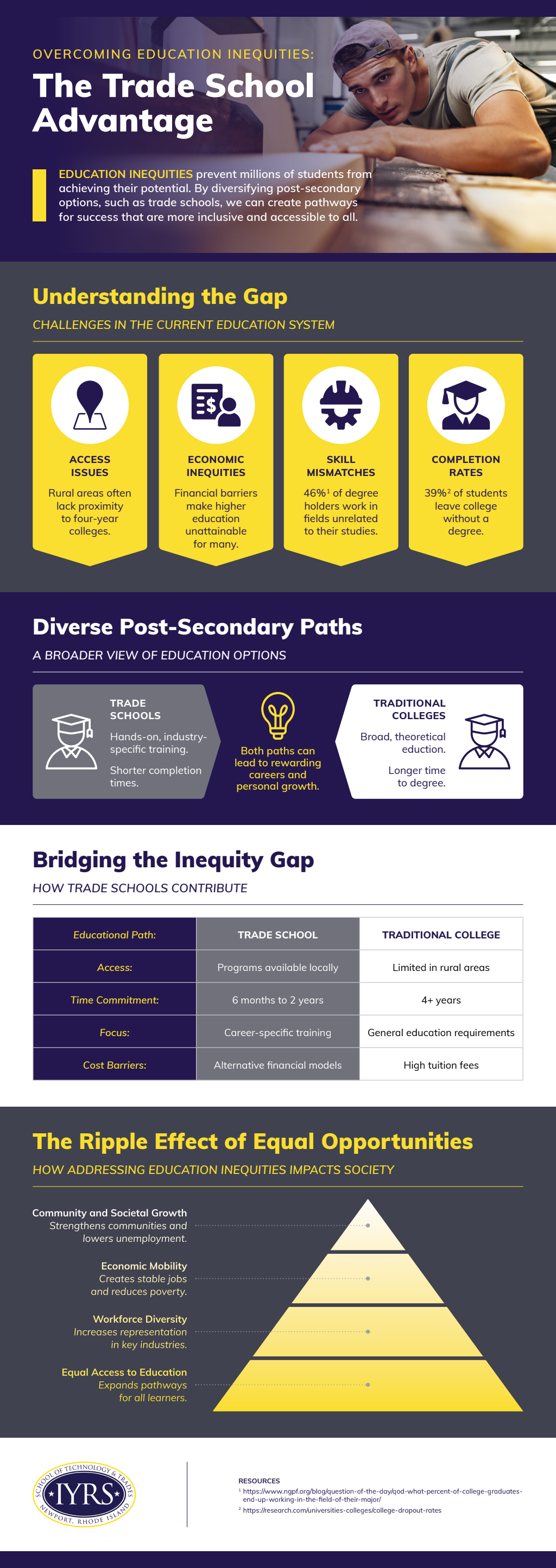
Bottom line: Trade school offers a faster, more affordable path to a stable career for students who are priced out of or underserved by traditional four-year colleges. Expanding access to vocational training helps close income gaps and connects underrepresented communities directly to in-demand jobs.
Related: education (this site).
Frequently asked questions
How does trade school help address education inequity?
Trade school lowers the financial and time barriers that keep many students from pursuing higher education. Lower tuition, shorter program lengths, and clear job pathways make skilled careers accessible to students regardless of their economic background.
What industries benefit most from trade school graduates?
Fields like electrical work, plumbing, HVAC, welding, and healthcare support consistently face labor shortages. Trade school graduates fill these roles quickly, often stepping into apprenticeships or entry-level jobs that lead to solid, long-term wages.
Is trade school a good alternative to a four-year degree?
For many students, yes. Trade school programs typically cost far less, take one to two years to complete, and lead directly to employment in growing industries without the burden of significant student debt.
What role do employers and communities play in supporting trade education?
Employers can partner with trade schools to offer apprenticeships, scholarships, and mentorship programs. Communities benefit when local businesses invest in training pipelines that keep skilled workers close to home and reduce economic disparities.
Related reading: The "Smart Wallet" For Education: AI's Role In Streamlining School Payment Transactions and Reasons To Become An Elementary School Teacher.



