A company’s brand is shaped not just by what it projects, but also by how it is perceived. While internal teams focus on logos, slogans, and mission statements, customers often respond to elements that are overlooked or undervalued. These disconnects, or branding blind spots, can weaken trust and influence buying behavior more than many business leaders realize.
Misalignment Between Message and Experience
One of the most common blind spots is a mismatch between brand messaging and customer experience. A company may claim to prioritize quality, yet deliver inconsistent service or delayed support. Customers notice these inconsistencies, and they often talk about them. Online reviews, social media posts, and customer feedback reflect the actual experience rather than the brand's intent.
For example, a brand promoting itself as innovative must deliver fresh ideas and efficient solutions across every customer interaction. If the technology is outdated or the process feels difficult, customers may question the brand's credibility. Internal perceptions do not always match the external impression, and that gap can damage long-term trust.
Visual Identity That Fails to Connect
A dated or inconsistent visual identity can create confusion. This includes not just logos and colors, but also the tone and design of websites, packaging, and digital content. If branding elements look out of sync across platforms, it signals a lack of cohesion. Customers might assume the company is disorganized or inattentive, even if the product itself is strong.
Regular brand audits can help identify where visual elements are falling short. Brand consulting firms often conduct these audits with an objective perspective, helping businesses correct misalignments that internal teams may miss due to familiarity or bias.
Tone That Doesn’t Reflect the Audience
Tone and language are often overlooked, especially in written content. Businesses may use technical jargon or a formal style that feels out of step with their target audience. On the other hand, a brand attempting to appear casual or trendy may alienate professional buyers or older demographics. The tone must reflect the preferences and expectations of the actual customer base, not just the aspirational image of the brand.
Surveys, customer interviews, and social media analytics can provide insights into how tone is perceived and whether it matches the audience’s expectations.
Ignoring Employee Influence
Want AI doing the heavy lifting in your marketing?
I build the systems that handle the boring 80 percent, so you get your week back. Done properly, with the human kept in.
Employees are brand ambassadors whether companies recognize it or not. If internal culture does not reflect the brand promise, employees may convey messages that contradict official branding. Customers often pick up on these discrepancies through interactions with staff, making employee training and internal alignment crucial to brand consistency.
Customers form impressions from every touchpoint, not just marketing materials. Recognizing and correcting branding blind spots requires listening to customers, analyzing behavior, and accepting that perception often carries more weight than intention. Addressing these hidden gaps helps build stronger, more authentic brand relationships that stand up to scrutiny. For more information, look over the accompanying resource.
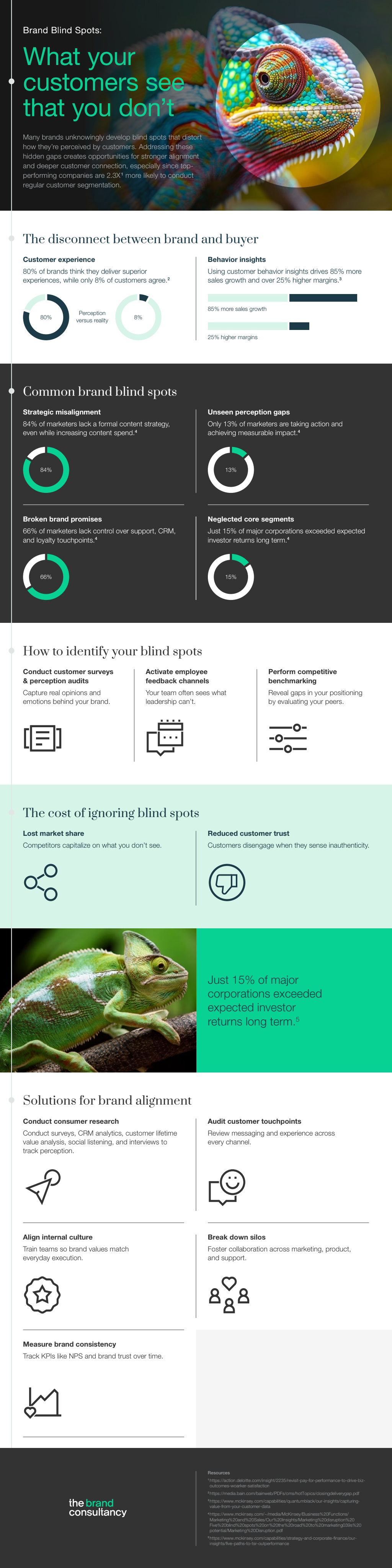
The short version: Your customers notice inconsistencies, outdated messaging, and gaps in your brand experience that you've become blind to after months of working on it. The best way to catch these blind spots is to step outside your business regularly and ask real customers what they see, not what you think they should see.
For guest contributors covering this area, read Write for Us Branding: Branding and Rebrand Blog Guest Post Guidelines.
Frequently asked questions
How do I identify my brand blind spots?
Ask people outside your business to describe your brand without your input. Show them your website, social media, and materials as if they're a stranger. Their honest feedback will reveal what you've stopped noticing because you live and breathe your brand every day.
Why do brand blind spots happen?
When you work closely with your brand, you become too familiar with it. You know the story behind every decision, so you assume customers understand your message the same way. This familiarity makes it hard to see what's confusing, outdated, or misaligned in your customer's eyes.
What's the cost of ignoring brand blind spots?
Ignored blind spots lead to lost customers, mixed messaging, and damage to your reputation. Customers notice when your brand promise doesn't match reality, when your visuals look dated, or when you're not showing up consistently. This gap between what you think you're projecting and what people perceive erodes trust.
How often should I check for blind spots?
Review your brand with fresh eyes at least quarterly. Invite new team members or customers to give you feedback, and periodically audit your messaging across all platforms. This keeps you connected to how your brand lands with the people you're trying to reach.