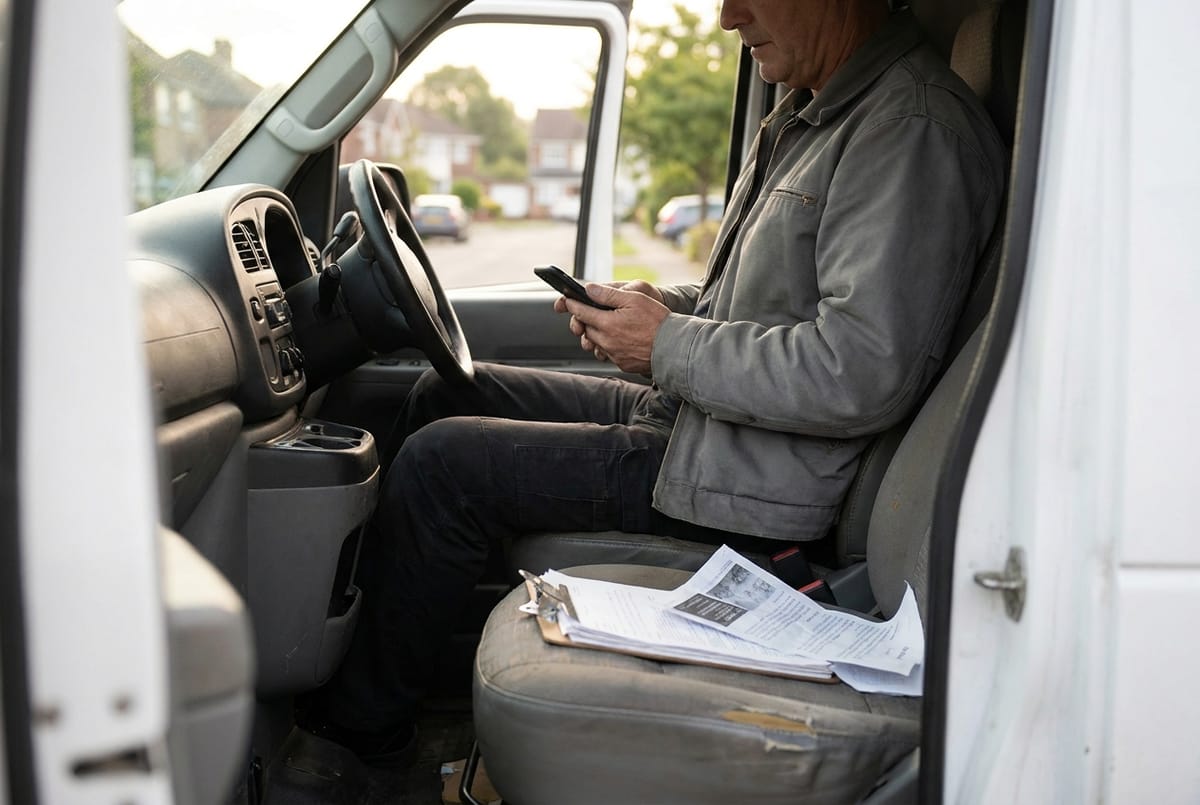
You go out, measure up, answer every question, and send a tidy quote the same evening. The customer says it looks great and they'll be in touch.
Then nothing. No yes, no no. A week later you're not sure whether to chase it or let it go, so most of the time you let it go.
If you run a service business, whether that's cleaning, landscaping, plumbing, roofing or anything else where you quote before you work, that silence is probably costing you more than any marketing gap. The lead was already warm. You'd already done the hard part. And the job quietly went to someone else, or to nobody at all.
This guide is about that gap: why good quotes go cold, and a simple, polite follow-up routine that wins more of them back without turning you into the business that won't stop texting.
Why good quotes go quiet
It's tempting to assume silence means "too expensive". Sometimes it does. But a lot of the time, the reasons are far more ordinary.
- They got busy. The quote arrived on a Tuesday night, they meant to look properly at the weekend, and the weekend came and went.
- They need to check with someone. A partner, a landlord, a business owner, a finance person. Your quote is sitting in a forwarded email they haven't opened.
- They're comparing. They asked three companies, and the other two haven't replied yet, so they're waiting to see everything side by side.
- They have a question they haven't asked. Can you start after the 15th? Does the price include taking the old one away? Small doubts stall decisions.
- They forgot who you were. If they spoke to three businesses in one afternoon, the names blur together fast.
Notice that only one of those is about price. The rest are about timing, attention and confidence. Those are things a well-timed message can actually fix.
The cost of never following up
Here's the uncomfortable bit. Most small service businesses put real money into getting the phone to ring: ads, directory listings, a decent website, maybe some SEO. Then they spend time on a site visit and a written quote.
By the time a quote is sent, you've already paid for that lead. Letting it drift without a single follow-up is like paying for a meal and walking out before it arrives.
There's also a fairness point. The customer asked you for a price. A short, friendly check-in isn't pushy. It's good service. Plenty of people genuinely appreciate the nudge, because it saves them from having to dig out your email and start the conversation again.
A simple follow-up routine that feels human
You don't need a complicated sales process. You need a small, repeatable routine that happens every time, not just when you remember. Here's one that works for most service businesses.
Day 0: send the quote properly
Before you think about follow-ups, make the quote itself easy to say yes to. Put the total where they can see it. Spell out what's included and what isn't. Add a clear next step, like "Reply YES to this message and we'll get you booked in" or a link to accept online.
If you can, send it while you're still in their mind. Same day is good. Same hour is better.
Day 2: a quick, useful check-in
Keep it short and give them an easy way to reply. Something like:
"Hi Sarah, just checking the quote for the garden clearance came through okay. Happy to answer any questions, or I can hold a date for you if you'd like."
That message does three jobs. It confirms they actually received it, invites the question they may have been sitting on, and hints that dates fill up, without any pressure.
Day 5 to 7: add something helpful
The second follow-up should bring something new. A photo of a similar job you finished recently. An answer to a question people often ask. A note that you've had a cancellation and could fit them in sooner.
If you just send "Any update?", you're asking them to do work. If you send something useful, you're making the decision easier.
Day 14: the polite close
The last message gives them a graceful way out, which, oddly, is often when people reply.
"Hi Sarah, I don't want to keep pestering you, so I'll close this quote off for now. If the timing changes, just reply here and I'll pick it straight back up."
Want AI doing the heavy lifting in your marketing?
I build the systems that handle the boring 80 percent, so you get your week back. Done properly, with the human kept in.
Some people will say they've gone elsewhere. That's fine. You'll know, and you can ask what tipped it, which is useful feedback you'd never get otherwise. Others will reply "Sorry, we've just been flat out, can we book for next month?"
Three messages over two weeks. That's it. Anything more starts to feel like chasing.
Text, email or a phone call?
Use the channel the customer used with you. If they texted to ask for a quote, follow up by text. If they filled in a form and gave you an email, start there. If it's a big-ticket job, a short phone call at the polite-close stage can be worth more than any message.
Whatever channel you choose, only message people who contacted you or agreed to hear from you, keep it personal, and make opting out easy. Rules on business texting and email vary by country, so check what applies where you work.
Where AI and automation help (and where they don't)
The routine above is simple, but it falls apart the moment you get busy, which is exactly when you're sending the most quotes. That's where a bit of automation earns its keep.
Most job management and CRM tools can now schedule follow-ups when a quote is sent and stop them automatically once the customer replies or accepts. AI writing tools can help you draft a few versions of each message in your own voice, so they don't read like a template.
What automation shouldn't do is pretend to be a conversation it isn't. If a customer replies with a real question, a person should answer it. Automate the reminders, not the relationship.
When they say yes, keep the momentum going
Winning the quote isn't the end. The moment a job is finished and the customer is happy is the best chance you'll get to win the next one, because the people choosing between you and a competitor next month will be reading what your last customer said about you.
Ask for a review while the result is fresh, ideally the same day, and make it a one-tap job. Review automation tools like https://reviewmonster.com send that request by text or email as soon as a job is marked complete, so it happens every time instead of only when someone remembers. Over time, that steady stream of recent reviews makes your next quote far easier to accept, because the trust is already there before you arrive.
It's a nice loop when it works: better follow-up wins more jobs, more jobs bring more reviews, and more reviews make the next quote an easier yes.
Mistakes that make follow-ups backfire
- Following up too fast. A message an hour after the quote feels needy. Give people a day or two.
- Discounting in the follow-up. Dropping the price unprompted teaches customers to wait you out. If price is the issue, let them tell you.
- Copy-and-paste messages. Use their name and mention the actual job. "Your quote" is weaker than "the quote for the fence along the back garden".
- Never closing the loop. An open quote you never close sits on your mind and in your pipeline. The polite close tidies it up either way.
- Not tracking anything. If you don't know how many quotes you send and how many you win, you can't tell whether your follow-ups are working.
Final thoughts
Most quotes aren't lost to a cheaper competitor. They're lost to a busy week, an unasked question, or a business that never got back in touch.
Pick a routine, write your three messages once, and use them on every quote you send this month. Then look at your numbers. You might find the easiest growth in your business was sitting in your sent folder all along.
Frequently asked questions
How many times should I follow up on a quote?
Two or three times over roughly two weeks is plenty for most service jobs. After that, close it politely and leave the door open.
Is it pushy to follow up on a quote?
Not if you're helpful and brief. The customer asked for the price, so checking it arrived and offering to answer questions is part of good service.
Should I offer a discount to win a quote back?
Usually not. Find out why they're hesitating first. Timing, scope or a missing detail are more common blockers than price, and none of those need a discount.
What should I do when a customer says they went with someone else?
Thank them, wish them well, and ask, without pressure, what made the difference. That answer is some of the most useful feedback you'll get.