Hybrid work has changed how employees communicate, collaborate, and share office space. With some team members working remotely and others attending in person, traditional workplace expectations no longer cover every situation. A conversation that seems harmless in the office might exclude remote colleagues, while an unexpected video call can interrupt someone's focused work. Establishing clear etiquette guidelines helps businesses maintain professionalism, reduce distractions, and create a more consistent experience for everyone.
Respect Different Work Schedules
Hybrid employees may follow different office schedules, particularly when companies allow flexible working hours. Managers should establish expectations around availability without assuming everyone works identical hours.
Before scheduling meetings, check shared calendars and consider time zones. Employees should also communicate when they are unavailable and avoid expecting immediate responses to nonurgent messages. Clear scheduling practices reduce interruptions and help teams coordinate responsibilities without unnecessary confusion.
Make Meetings Inclusive for Everyone
Hybrid meetings can become frustrating when remote participants struggle to hear conversations or contribute to discussions. Employees attending in person should avoid side conversations that remote colleagues cannot follow.
Meeting organizers should confirm that cameras, microphones, and conferencing software work before discussions begin. Important documents should be shared digitally so everyone can access the same information.
Smaller meeting spaces can also support focused conversations. For example, a 4-person meeting pod may provide a quieter setting for employees joining video calls without disturbing coworkers nearby.
Follow Shared Workspace Etiquette
Hybrid offices often rely on shared desks, conference rooms, and common areas. Employees should leave these spaces clean and ready for the next person.
Personal belongings should not occupy unassigned workstations overnight unless company policies permit it. Shared equipment, including monitors and docking stations, should be returned to its standard setup after use.
Noise levels also deserve attention. Employees taking frequent calls should use designated meeting areas rather than conducting lengthy conversations near colleagues who need to concentrate.
Want AI doing the heavy lifting in your marketing?
I build the systems that handle the boring 80 percent, so you get your week back. Done properly, with the human kept in.
Communicate Clearly Across Locations
Remote employees can miss informal conversations that occur naturally in an office. When important decisions happen during these discussions, team members working elsewhere may lack essential information.
Managers should document project updates, deadlines, and decisions in shared communication platforms. This helps employees access information regardless of where they work.
Communication expectations should also distinguish urgent matters from routine updates. A quick message may be appropriate for a simple question, while complicated issues might require a scheduled conversation.
Build Consistent Expectations Across Teams
Office etiquette works best when expectations apply fairly to both remote and onsite employees. Managers should explain policies during onboarding and revisit them when workplace arrangements change.
Employee feedback can reveal problems involving meeting access, shared spaces, or communication practices. Addressing these concerns early helps prevent unnecessary tension between teams.
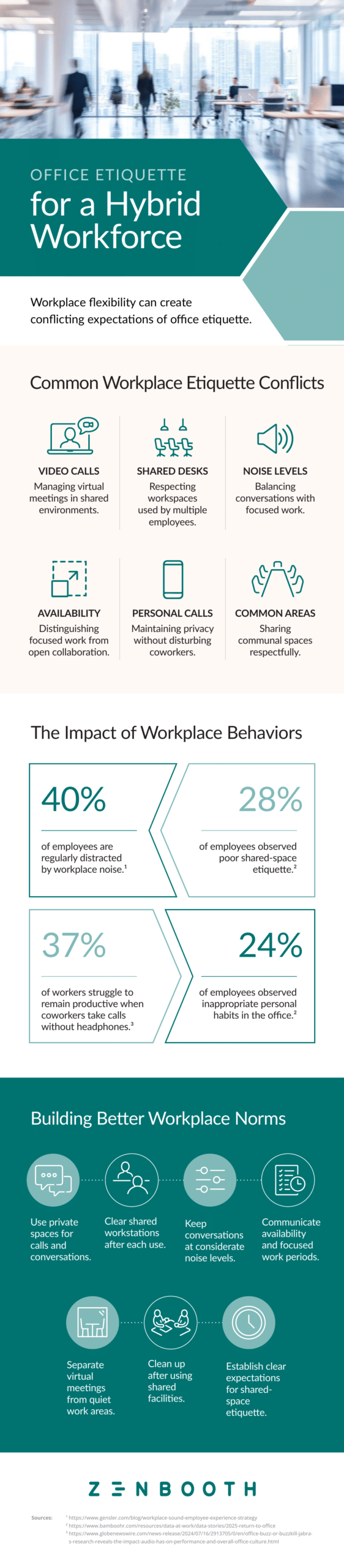
Effective hybrid workplace etiquette depends on mutual respect and consistent communication. Clear scheduling practices, inclusive meetings, and responsible use of shared spaces help employees work together more efficiently. Businesses that establish practical expectations can support collaboration while respecting different working arrangements. Check out the infographic below for more information.