There is no question that technology has radically changed the way people buy. Digital transformation is no longer a buzzword, it's a way of life and has resulted in a dramatic shift in how businesses sell if they want to attract today’s modern buyer.
Every B2B business I speak to has social selling on the top of their agenda.
To attract today’s buyer, you must shift your mindset and dialogue from “What can I sell you?” to “How can I help you?”
Gone are the days of cold calling and hardcore sales pitches. People want and expect more. In addition to the increased expectations of buyers, they also want to know more about the person that represents the company.
This means your personal brand is more critical than ever. One of the first places people will look to learn more about you is your LinkedIn profile. You only have seven seconds is to wow a potential client.
But with all change, all comes tremendous opportunity. LinkedIn has provided you with the ability to connect directly with your ideal prospects, with the click of a button.
But LinkedIn has been ignored by many. Why is that if it's such a powerful tool for generating new leads and clients? I believe it's because most people don't consider it fun or sexy. Some people perceive LinkedIn as boring in comparison to Facebook for example. But I don't find anything boring about leveraging the power of LinkedIn to have a more successful business.
There are many mistakes people make on LinkedIn. Some focus on the wrong things, others going into a sales pitch right after connecting. There is a process that is highly effective, and it includes five crucial steps to turn LinkedIn into a highly predictable lead generator for you; I call this The LINK Method™.
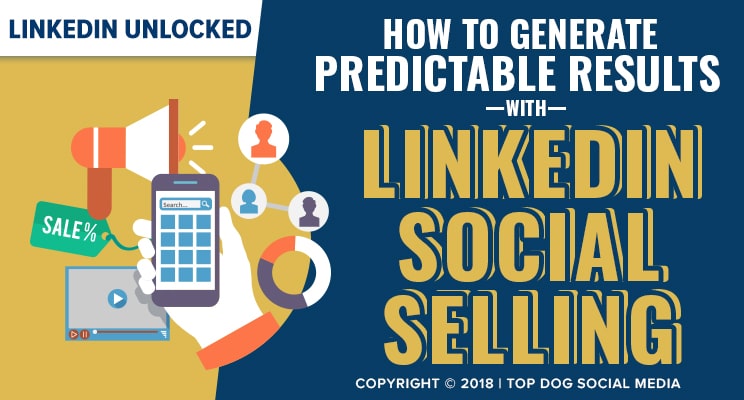
In the infographic below I share that five-step process along with the other highest leveraging activities you can focus on if you want to generate predictable results with LinkedIn and social selling.
How to Generate Predictable Results with LinkedIn Social Selling

Too many people focus on collecting connections instead of building relationships. Building relationships and trust is vital if you want to implement social selling to increase your sales pipeline successfully.
There is no question that LinkedIn is the premier business platform for social selling, with 80% of all B2B leads that come from social media, coming from LinkedIn.
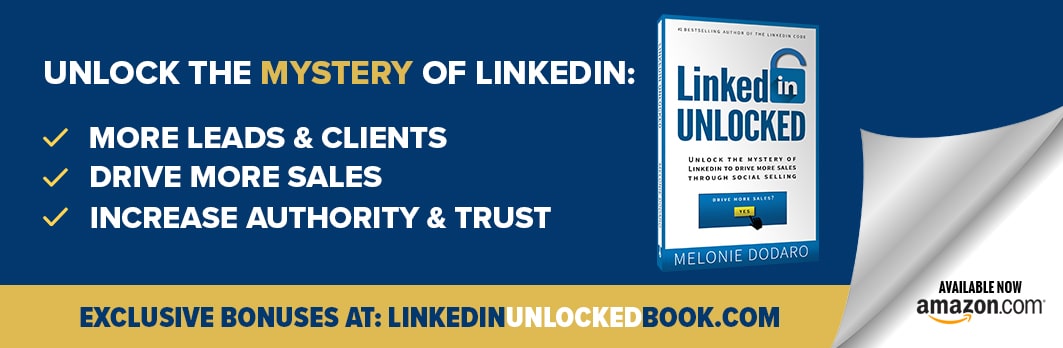
The tips shared in this infographic above represent just a small portion of complete LinkedIn roadmap I have laid out in my brand-new book LinkedIn Unlocked: Unlock the Mystery of LinkedIn To Drive More Sales Through Social Selling.
In LinkedIn Unlocked you provide you with a step-by-step system that you can do in less than 30 minutes a day to generate a steady stream of new leads and clients.
In celebration of the launch of my new book LinkedIn Unlocked, I'm giving away $221 in free bonuses, including a downloadable companion workbook with all of the exercises, worksheets and templates provided in the book. Click here now to learn more about LinkedIn Unlocked and the exclusive bonuses.
Want AI doing the heavy lifting in your marketing?
I build the systems that handle the boring 80 percent, so you get your week back. Done properly, with the human kept in.
About the author:
Related: how to make money on Instagram with 1k followers
The Exact Weekly Rhythm That Turned My LinkedIn Effort Into Predictable Pipeline
Most LinkedIn social selling advice tells you to "be consistent" without ever defining what consistent means in hours, actions, or outcomes. After tracking my own LinkedIn activity against closed revenue for 18 months, I found that the results became predictable only when I stopped treating LinkedIn as a daily free-for-all and committed to the same sequence of actions in the same order every single week. The sequence matters as much as the actions themselves.
Here is the exact weekly structure I use. On Monday I spend 20 minutes reviewing connection requests and sending 10 personalised connection requests to people who have either commented on content in my niche or recently changed job titles in my target market. Job title changes are gold because people in new roles are actively looking to prove themselves, which means they are far more open to new approaches and tools. On Tuesday and Thursday I post original content, never shared links, never reposts. On Wednesday I spend 30 minutes doing what I call "value drops," which means leaving three to five useful comments on posts by prospects I want to build relationships with. Not "great post!" comments. Comments that add a data point, a counterargument, or a specific example. On Friday I send follow-up messages to anyone who engaged with my content that week, referencing exactly what they said or did.
The numbers that came out of tracking this were striking. In months where I followed this rhythm consistently for all four weeks, I averaged 4.2 qualified sales conversations started per month from LinkedIn alone. In months where I skipped Wednesday commenting or replaced Tuesday original posts with shared articles, that number dropped to 1.6. That is not a small variance. The Wednesday commenting session turned out to be the single highest-use activity in the whole week, which I would never have guessed before I measured it.
- Monday: 10 personalised connection requests, targeting job title changes and active commenters in your niche
- Tuesday: One original post, text-based or a carousel, no external links in the post body
- Wednesday: Five substantive comments on prospect posts, each comment adding real information
- Thursday: Second original post, this one can be more personal or opinion-led to vary the tone
- Friday: Personalised follow-up messages to that week's engaged contacts, maximum eight messages, written individually
One thing most articles will not tell you is that the follow-up messages on Friday work precisely because of the Wednesday comments. By the time you message someone on Friday, they have often already seen your name twice that week: once on a comment you left somewhere, and once on your own content if they follow you. The message does not feel cold. It feels like a continuation of something that already exists, which is the entire point of social selling and something a one-off outreach blast will never replicate.
If you are starting from scratch, do not try to compress this into three days a week to save time. Run the full five-day structure for eight weeks before you judge it. Eight weeks gives the algorithm time to learn your posting pattern, gives your network time to start recognising your name, and gives you enough data points to see whether your messaging and content angles are resonating. Before eight weeks you are making decisions on noise, not signal.
The short version: LinkedIn social selling works best when you treat it as a system, not a series of random acts of outreach. Build credibility through consistent content, warm up your connections before pitching, and measure the right signals like engagement and conversation rate rather than follower counts. Predictable results come from repeatable habits, not lucky moments.
Frequently asked questions
What does "social selling" on LinkedIn mean?
Social selling on LinkedIn means using your profile, content, and direct conversations to build relationships with potential buyers before you ever make a sales pitch. It is not about spamming connection requests or posting promotional content every day. It is about showing up consistently, sharing genuine insight, and earning trust so that when someone is ready to buy, you are already the person they think of first.
How long does it take to see predictable results from LinkedIn social selling?
Most people start to see early signals, like profile views, comment conversations, and inbound connection requests from ideal buyers, within 60 to 90 days of consistent activity. Truly predictable pipeline results typically take three to six months because you need enough data to identify which content types and outreach sequences convert for your specific audience and offer.
What metrics should I track to know if my LinkedIn social selling is working?
Focus on conversation rate, meaning how many connections turn into real two-way conversations, along with the number of discovery calls booked directly from LinkedIn activity. Vanity metrics like likes and follower growth feel good but rarely tell you whether your efforts are generating revenue. Track weekly outreach volume, response rates, and pipeline value attributed to LinkedIn so you can spot what to repeat and what to drop.
Do I need a big following on LinkedIn to make social selling work?
No. A highly engaged network of a few hundred well-targeted connections will outperform a passive audience of tens of thousands every time. Quality of relationship matters far more than quantity of followers. Prioritise connecting with people who match your ideal client profile, engage meaningfully with their content, and start conversations that are useful to them rather than chasing follower numbers.