


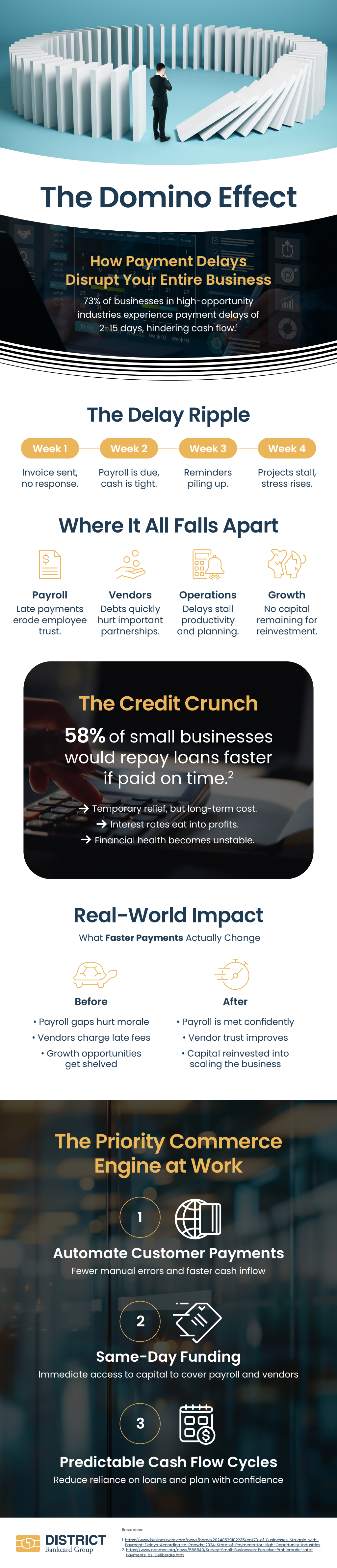
Late payments can ripple through every aspect of a business. Cash flow interruptions affect operations, employee satisfaction, and growth potential. Understanding the consequences of delayed payments is critical for maintaining stability and planning for long-term success.
Cash Flow Challenges
The most immediate impact of late payments is on cash flow. Businesses rely on predictable income to pay bills, manage payroll, and invest in inventory. When payments arrive late, companies may struggle to cover essential expenses. Even short delays can force leaders to borrow funds or postpone investments, creating a cycle of financial strain.
Small businesses are particularly vulnerable. Without large reserves, a single overdue invoice can jeopardize the ability to meet monthly obligations. For government contractors, specialized solutions like payment processing for government contractors help streamline receivables and reduce the risk of cash flow interruptions.
Operational Disruptions
Payment delays often affect daily operations. Orders for materials may be postponed, production schedules may need adjustment, and projects can stall. When cash flow becomes unpredictable, businesses cannot plan with confidence, leading to inefficiencies and increased operational costs. Employees may also feel the effects if payroll or bonuses are delayed, lowering morale and productivity.
Strained Relationships
Late payments can damage relationships with suppliers, partners, and employees. Suppliers may impose stricter credit terms or require upfront payments, increasing operational pressures. Long-term partnerships can suffer when trust is eroded. Customers may also notice when a business cannot maintain consistent service levels due to delayed resources, affecting reputation and client retention.
Want AI doing the heavy lifting in your marketing?
I build the systems that handle the boring 80 percent, so you get your week back. Done properly, with the human kept in.
Financial Planning and Growth Limitations
Delayed payments complicate budgeting and strategic planning. Without a reliable forecast of incoming funds, businesses may postpone hiring, marketing, or expansion initiatives. Growth opportunities can be missed as decision-makers focus on bridging short-term financial gaps instead of pursuing long-term objectives.
Mitigating the Risks
Proactive management of receivables is essential. Clear payment terms, timely invoicing, and consistent follow-up reduce delays. Businesses can also leverage technology, such as automated payment reminders and specialized payment processing platforms, to streamline collections. For sectors like government contracting, solutions that handle compliance and invoicing requirements can prevent common delays and maintain steady cash flow.
Payment delays affect more than finances. They disrupt operations, strain relationships, and limit growth potential. Prioritizing effective payment management, implementing supportive technology, and maintaining clear communication with clients are vital strategies. Businesses that address these issues proactively create stability and position themselves for long-term success. For more information, feel free to look over the infographic below.
Related reading: Mobile Payment Solutions: Top 10 Services for Small Business and How to run your entire business using only one tool.

