We've all been to that fundraiser, awards banquet or committee meeting where we write our name on a peel and stick label. At times the label just has a simple coloured border, at other times 'Hello, My Name Is…' is pre-printed on the label. Either way, it's a struggle to position it straight, notwithstanding the nagging questions, 'Can anyone read this handwriting?'; or 'Will any glue residue will be left behind on this shirt?'; or 'Will this stay attached?'.
In today's environment, an important consideration is event security, but those adhesive style labels, that can be purchased in the stationery department of pretty much any retail outlet across Canada, means that entry not that difficult for an unauthorized person.
Event Security: Make Sure Your Spring Event Is Secure With ID Cards

In the last 20 years, Canadians have become familiar with security products like plastic ID badges on medical personnel and banking staff, and employees in other industries are quickly becoming accustomed to using a personal ID badge for entering their place of employment. The technology for creating ID cards has become affordable to the point that nearly any good-sized gathering can benefit from the security offered by ID cards. Expensive software is not required – simply get your own ID printer and learn how to use it. Similar to software on your home computer for producing mailing labels, software for printing plastic name badges is dedicated to that purpose and readily available at affordable prices.
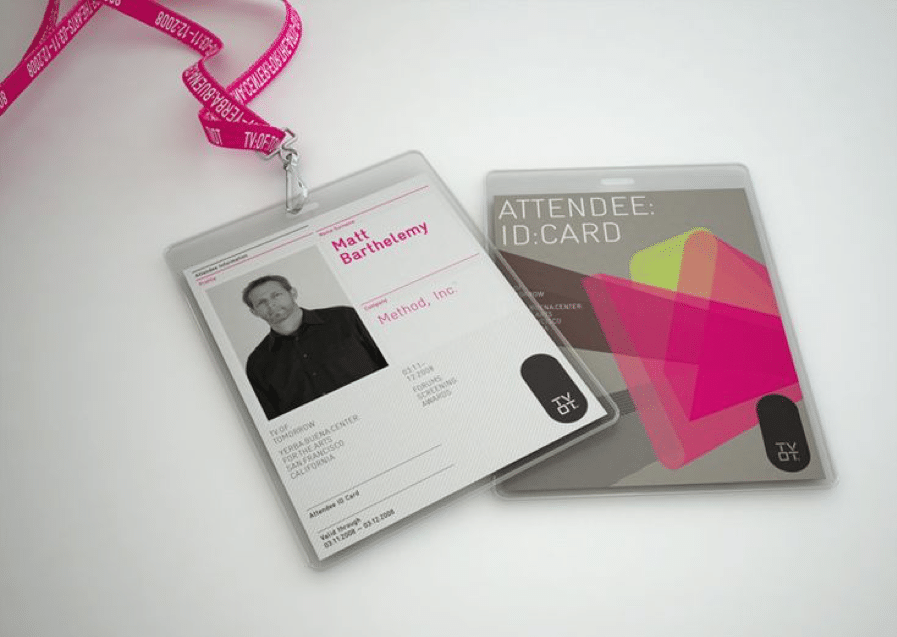
Consider an annual conference at a large hotel, where this year's guests have pre-registered and others will register the day of the event. Attendees will pick up their ID badges and a complimentary lanyard at check-in. Walk-in registrations will have a badge printed on the spot through a portable printer. These types of portable security products can be purchased for a reasonable cost, with blank cards and ink the only ongoing expense, and the security benefits are evident to anyone who has attended one of these events.
Attendees no longer leave and enter the conference with little checking other than a visual look at the person's name badge, and badges are scanned for authorized entrance or lead generation. Rigid plastic ID badges with the organization's logo and a guest's name ensure that the person has registered, contributing to the event running securely. Most importantly, they keep out potential thieves or those wishing to disrupt the event; if this is an ongoing or annual event, and you need to ensure that people attend next time, you need ID cards to ensure that things run smoothly.
In Canada today, there is a vast array of security products and systems available, but a respectable start is that ubiquitous plastic ID card: simple, affordable and readily accepted by your employees or guests. Reputable companies, right here in Canada, carry all the accessories needed to create the appropriate identification for your event.
Related: Why New Homeowners Should Prioritize Mattress Quality for Better Sleep
The short version: ID cards are one of the simplest and most effective ways to control who gets into your spring event and keep attendees, staff, and volunteers safe. A well-designed card with a photo, name, and role removes guesswork at the door and gives your security team a clear visual reference all day long. Print them in advance, assign them by role, and you will stop problems before they start.
Want AI doing the heavy lifting in your marketing?
I build the systems that handle the boring 80 percent, so you get your week back. Done properly, with the human kept in.
What I Learned After a Gate Crash Nearly Derailed a 400-Person Garden Party
A couple of years ago I was brought in to consult on a spring fundraiser held at a private estate in Cheshire. The organisers had done everything right on paper: printed tickets, a guest list, two people on the door. What they had not done was issue ID cards to staff and volunteers. By early evening, someone had walked in wearing a hi-vis jacket, helped themselves to the buffet, and spent forty minutes mingling before a volunteer recognised they had no idea who this person was. No harm was done in the end, but the organisers were shaken, and the lesson cost them nothing except embarrassment. Had it gone differently, it could have cost them their venue licence.
The single change that would have stopped it entirely was a colour-coded staff ID card with a photograph and a role title printed clearly on the front. Not a lanyard with a generic logo, not a wristband, but an actual card showing a face. Here is what I now recommend to every event client running a spring function with more than 150 attendees:
- Use at least three distinct card colours: one for paid staff, one for volunteers, one for suppliers and caterers.
- Print the event date directly on the card so it cannot be reused at a future event.
- Include the card holder's department or zone, for example "Front of House" or "Kitchen Access Only", so any guest or colleague can immediately spot if someone is in the wrong area.
- Brief every single staff member that checking a card is not rude, it is their job, and that the instruction comes from the top.
- Collect all cards at the end of the night and cross-reference them against your original issue log.
On the collection point: most articles about event ID cards talk about issuing them and stop there. Getting them back matters just as much. At a spring market I helped organise in Manchester last year, we issued 47 vendor cards. At close of day we retrieved 44. Three were unaccounted for, which triggered a brief review with the venue's security team. It turned out two had been handed to a colleague and one had been lost in a jacket pocket, all entirely innocent, but the point is we knew to look. Without a collection log, you would never even know cards were missing until they potentially showed up somewhere they should not.
Printing costs are far lower than most people assume. For a spring event with 50 to 100 staff and volunteers, you are typically looking at between 30 and 60 pounds for professionally printed PVC cards with photo ID, depending on quantity and turnaround time. Compare that to the average public liability claim following a security incident, which the Event Safety Alliance puts at several thousand pounds at minimum, and the business case makes itself in about ten seconds.
My honest opinion, having watched clients resist this step because it feels overly formal for a spring garden event or a seasonal pop-up: the relaxed, floral, bunting-and-prosecco atmosphere is precisely why someone opportunistic will try their luck. A cheerful event with a friendly crowd looks easy to blend into. A visible, consistent ID card system is one of the cheapest deterrents you will ever put in place, and it signals to your paying guests that the people around them have been verified.
Frequently asked questions
What information should be printed on an event ID card?
At minimum, include the attendee's full name, a photo, and their role such as guest, staff, or vendor. Adding a color-coded border for each role makes it faster for security to spot who belongs where at a glance.
Should I use lanyards or badge holders for a spring outdoor event?
Lanyards are the most practical choice for outdoor events because they keep cards visible and hands free. Choose waterproof badge holders so that light rain or humidity does not damage the printed card during the event.
How far in advance should I print ID cards for my event?
Print your cards at least one week before the event so you have time to correct errors, reprint cards for last-minute registrants, and organize them by role or alphabetical order before the day arrives.
Can ID cards help with liability if something goes wrong at my event?
Yes. A card-based check-in system creates a record of who was granted access and in what capacity, which can support your team if an incident needs to be reviewed after the event closes.