


Early-stage companies often thrive on ingenuity, grit, and a lean structure. But no startup scales in isolation. The transition from fledgling venture to established force in the market depends heavily on the ability to form and manage strategic partnerships. These relationships extend beyond vendor agreements or marketing collaborations. They shape how a company evolves, how fast it can move, and how well it can adapt as the stakes get higher.
Start Small, Think Long-Term
Founders may begin by securing technical partners or early-stage distribution channels that help bring a product to market. These decisions, while sometimes made under pressure, have ripple effects. A logistics provider selected in year one can become an operational bottleneck or a competitive advantage in year three. Likewise, a software integration partner might define the roadmap for future features or influence which markets are reachable.
Strategic partnerships in this phase are usually reactive. A need arises. A partner fills the gap. But even at this point, selecting the right partner is more than transactional. Companies that assess compatibility beyond price (such as shared goals, communication style, long-term incentives) set the groundwork for growth that doesn't buckle under scale.
Scaling Up Requires a Different Kind of Alignment
As a company grows, partnership decisions shift. Legal frameworks become more intricate. Timelines stretch. Dependencies increase. What worked during the startup phase may no longer fit once expansion capital enters the picture and expectations harden.
Strategic partnerships during scale focus less on filling a gap and more on amplifying reach. Think co-development, co-branding, data sharing. These moves can open access to new regions or verticals, speed up product improvements, and create barriers for competitors. But they require deeper planning and a clear understanding of mutual value. One-sided deals unravel quickly.
This is also the stage where due diligence firms come into play. As larger partners enter the conversation, the vetting process intensifies. Reputation, compliance, and financial viability matter as much as the product or service being offered.
Sustaining the Advantage
Want AI doing the heavy lifting in your marketing?
I build the systems that handle the boring 80 percent, so you get your week back. Done properly, with the human kept in.
A well-managed strategic partnership can outlast multiple product cycles. But relationships that aren't reviewed or realigned risk becoming liabilities. Power dynamics shift as companies grow at different speeds. What began as a mutual boost can slip into imbalance if left unchecked.
It helps to assign ownership internally. Someone needs to track performance, communicate with the partner, and revisit expectations. Regular touchpoints, not just annual reviews, keep things healthy. And it’s wise to anticipate exit ramps. Partnerships, like products, sometimes expire.
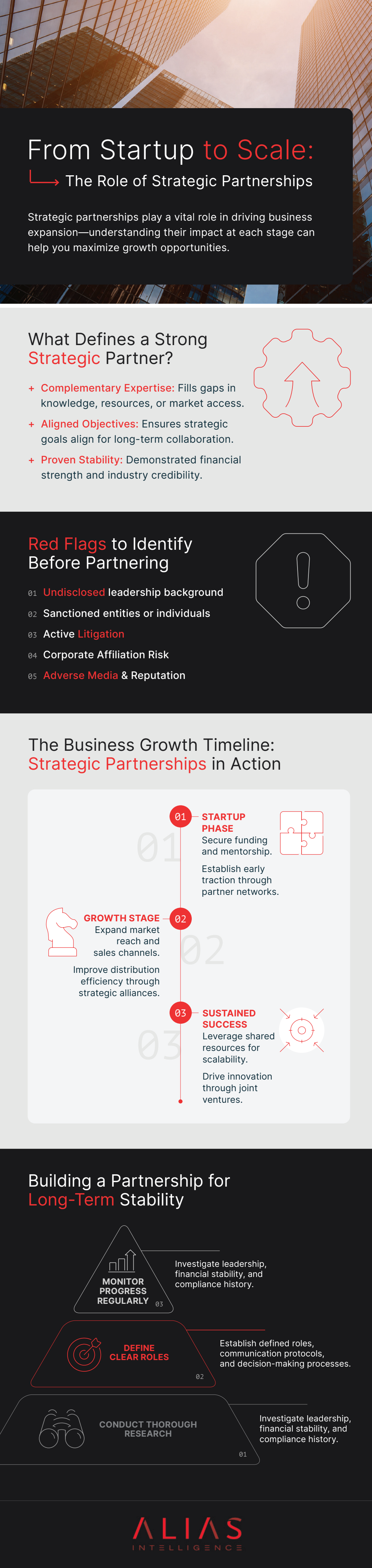
Growing a startup into a sustainable enterprise involves more than capital or code. Strategic partnerships offer the infrastructure for growth. They bring in capabilities faster than building them in-house and often provide credibility in markets where trust is scarce. Look over the accompanying resource for more information.
Free resource: The Partner Vetting Checklist.
Related reading: Scale-up! The ultimate business game to learn business operations before you get started and monday.com review: How to be more organised and scale your business.

