


- Reach more people with your content with influencer marketing
- More personalized, targeted content and email marketing automation
- Video and other types of visual content
- Online courses
- Get more engagement with interactive content
- Why Micro-Video Will Outperform Long-Form Video for Most Small Businesses in 2017
- Conclusion
- Frequently asked questions
Reach more people with your content with influencer marketing

More personalized, targeted content and email marketing automation

Video and other types of visual content
 Video is an extremely effective form of content, and yet it’s not nearly as used as one would expect. For example, just including a video in your email can increase your click-through rate by 200 to 300% and 64% of those who view a video are more likely to buy a product online.
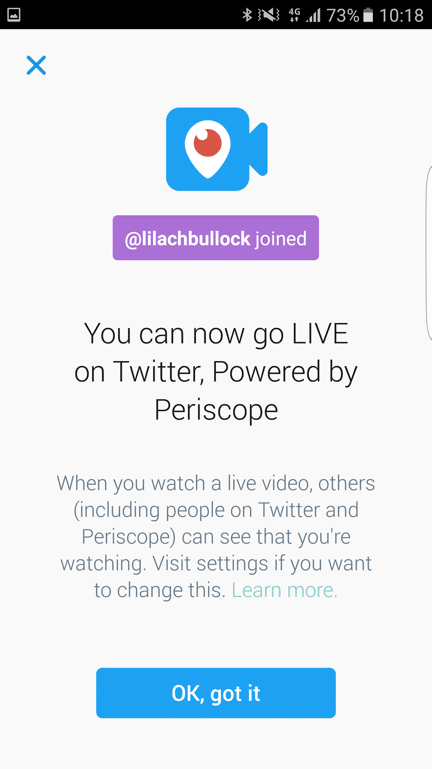
Live streamed video has been extremely popular last year and all signs point towards a similar success in 2017. Facebook, Instagram, Snapchat and now Twitter (among others), all offer live streaming options, which presents businesses and marketers with a big opportunity this year.
There are lots of ways that you can use live streaming, such as by offering a behind the scenes look into your business, interviews and Q&A’s, and much more.
Video creation is easier than ever for users of all levels and all experiences. There are plenty of tools that you can use, even as a beginner, to create beautiful videos, including animations, whiteboard videos, video slideshows and much more.
Video is an extremely effective form of content, and yet it’s not nearly as used as one would expect. For example, just including a video in your email can increase your click-through rate by 200 to 300% and 64% of those who view a video are more likely to buy a product online.
Live streamed video has been extremely popular last year and all signs point towards a similar success in 2017. Facebook, Instagram, Snapchat and now Twitter (among others), all offer live streaming options, which presents businesses and marketers with a big opportunity this year.
There are lots of ways that you can use live streaming, such as by offering a behind the scenes look into your business, interviews and Q&A’s, and much more.
Video creation is easier than ever for users of all levels and all experiences. There are plenty of tools that you can use, even as a beginner, to create beautiful videos, including animations, whiteboard videos, video slideshows and much more.
Online courses
Another way of diversifying your content offering is to create an online course. The online course industry is hugely successful and growing at a very rapid rate. In fact, it’s become an $107 billion industry, almost doubling from $56.2 billion back in 2014. Just like with video creation, online courses are now very easy to produce, even if you’re a complete beginner. All you need to do is create all of the content you want included in your course and then use a tool to put it all together. It’s definitely a lot of work, but it can yield great results and help you stand out, as it’s definitely one of the more complex forms of content, so it’s less likely your competitors will also create an online course.Get more engagement with interactive content

Why Micro-Video Will Outperform Long-Form Video for Most Small Businesses in 2017
Everyone is telling you to go live on Facebook and produce cinematic YouTube series, and yes, those formats have their place. But here is what the data from my own client work showed me throughout late 2016: a 60-second vertical video posted natively to Facebook consistently outperformed a polished 8-minute tutorial by a ratio of roughly 4 to 1 on organic reach. Not because the short video was better quality. Because people stopped scrolling for it. That single behavioural fact should change how you budget your content time in 2017.
Micro-video means anything under 90 seconds produced with a specific, singular point. One tip. One product close-up. One behind-the-scenes moment that lasts the length of a coffee pour. The mistake most marketers make is treating short video as a trailer for longer content. It is not. It is its own complete content unit, and when you treat it that way, your audience responds completely differently. I worked with a florist client who replaced her monthly blog posts with three 45-second Instagram videos per week showing one flower-arranging technique each. Her enquiries from social media doubled within six weeks. No paid promotion, no influencer outreach.
The practical production reality matters here too. A micro-video shot on an iPhone 7 in good natural light, with a free caption overlay from an app like Clips or even just burned-in text, costs you about 20 minutes of your day. A polished long-form video costs you a day minimum, sometimes a crew, and editing hours you probably do not have. In 2017, consistency will beat occasional perfection on every platform. Posting three short videos a week for three months builds a far stronger algorithmic footprint than posting one brilliant long video per month.
- Film in portrait orientation for Instagram and Facebook Stories because landscape video on mobile already feels dated to younger audiences
- Put your most important information in the first 3 seconds, before the viewer decides whether to tap for sound
- Captions are not optional in 2017 - 85% of Facebook video is watched without sound, so your words need to be on screen
- Repurpose one idea across three lengths: 15 seconds for Instagram, 45 seconds for Facebook, 90 seconds for Twitter or LinkedIn, rather than producing three separate ideas
- End with a statement, not a question - "Try this tomorrow morning" converts better than "What do you think?" because it respects the viewer's time
The honest opinion most articles will not give you is this: the brands that will win on video in 2017 are not the ones with the biggest production budgets. They are the ones who show up on camera without being precious about it. Authenticity is not a buzzword here, it is a measurable factor. A slightly shaky, real, useful 50-second video of you solving one specific problem your customer has will generate more shares, saves, and direct messages than a colour-graded brand film that took three weeks to produce. I have seen this pattern repeat across retail clients, service businesses, and solo consultants alike.
Start with one micro-video this week. Pick one question you were asked by a client in the last fortnight, answer it on camera in under a minute, add captions, and post it natively to Facebook. Watch what happens to your reach compared to your last text post. That single experiment will tell you more about where to put your content energy in 2017 than any trend report, including this one.
Conclusion
Although 2017 is going to be a tough year for content marketers, with a strong plan in place and great, engaging content ready to be shares, you can still get great results this year. What forms of content do you think will be most successful in 2017? What will be the best and most effective ways to promote your content this year? Let me know in your comments, and please share:)Related: how to make money on Instagram with 1k followers
The short version: In 2017, video content is set to dominate, with live streaming and short-form video pulling in massive engagement across every major platform. Visual storytelling, interactive content, and personalized experiences are pushing brands to rethink how they connect with their audiences. The winners will be those who create content that feels human, immediate, and useful to the people they are trying to reach.
Frequently asked questions
Why is video content so important in 2017?
Video content drives higher engagement than any other format, and with platforms like Facebook, Instagram, and YouTube all prioritizing video in their algorithms, brands that invest in it are going to reach far more people. Live video in particular creates a sense of urgency and authenticity that pre-recorded content simply cannot match.
Is written content still worth investing in during 2017?
Absolutely. Long-form written content that is deeply researched and useful continues to perform well in search and builds real authority for brands. The key is quality over quantity, as audiences are more selective than ever about what they choose to read and share.
What role does interactive content play in 2017?
Interactive content such as quizzes, polls, and assessments gives audiences a reason to participate rather than just consume, which drives significantly higher engagement and time on page. Brands that build this kind of two-way experience are building stronger relationships with their audiences.
Want AI doing the heavy lifting in your marketing?
I build the systems that handle the boring 80 percent, so you get your week back. Done properly, with the human kept in.
How important is personalization in content strategy for 2017?
Personalization is no longer a nice-to-have feature, it is an expectation. Audiences respond far better to content that speaks directly to their specific needs and interests, and brands that use data to tailor their messaging are seeing real improvements in both reach and conversion.
Related reading: What AI Consultants Do (The Real Job, Not the LinkedIn Version).
Related reading: Why Your AI-Polished Emails Are Getting Fewer Replies Than Your Messy On.
Related reading: I Replaced My Business Phone With An AI Voice Agent For 30 Days: Here's .
Related reading: How AI Consultants Help Businesses Plan Their Marketing Strategy.
Related reading: How AI Consultants Can Close More High-Ticket Projects Without Lowering .
Related reading: The Best Format for a Landscape Instagram Story (And Why Landscape Is Us.

