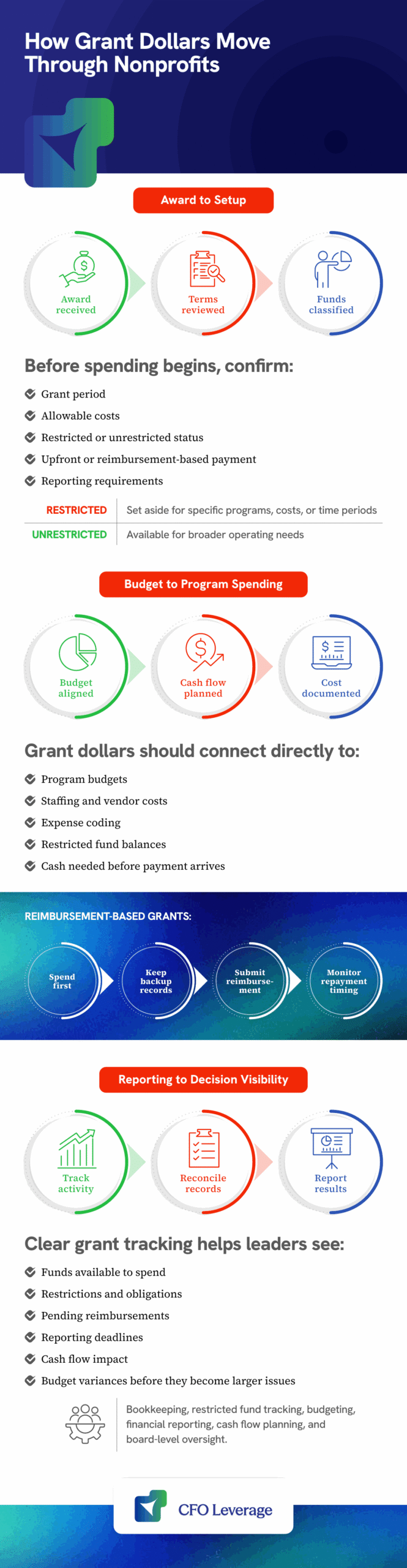
A grant award can fund a new program, expand an existing service, or help a nonprofit reach people it could not otherwise serve. The money does not simply enter a bank account and become available for any organizational expense. Grant dollars often follow a defined path from award acceptance through spending, reporting, and closeout. Managing that path carefully helps nonprofits meet funder requirements while maintaining accurate financial records.
The Grant Agreement Sets the Boundaries
The financial process starts with the award agreement. It typically identifies the grant period, approved activities, reporting requirements, and any restrictions on how funds may be spent.
A grant supporting a youth education program, for example, might cover instructor salaries, classroom materials, and transportation. Using those funds for an unrelated building renovation could violate the terms of the award.
Program and finance employees should review these requirements together before spending begins. This gives both teams the same reference point for future decisions.
Funds Need Their Own Accounting Trail
Once a grant is accepted, the organization needs to track the associated revenue and expenses. Accounting systems may use funds, classes, projects, or other identifiers to separate one award from another.
This becomes especially important when several funding sources pay for the same program. An employee might spend half of the week on a grant-funded project and the remainder on other organizational work. Payroll costs need to be allocated according to appropriate records rather than charged entirely to whichever grant has money available.
Strong budgeting for nonprofit organizations also connects grant spending with the nonprofit's larger financial picture. Leadership needs to see how restricted funding, unrestricted revenue, administrative costs, and future obligations interact.
Spending Requires Documentation
As the program operates, grant dollars begin moving into payroll, supplies, equipment, transportation, professional fees, and other approved expenses.
Want AI doing the heavy lifting in your marketing?
I build the systems that handle the boring 80 percent, so you get your week back. Done properly, with the human kept in.
Each transaction should have supporting documentation. Depending on the expense, that could include an invoice, receipt, contract, purchase order, payroll record, or time record.
Timing is another consideration. A legitimate program expense may still be ineligible if it occurs before the grant starts or after the funding period ends. Regular reviews can catch questionable transactions while there is still time to investigate them.
Reports Connect Spending to Program Activity
Financial reporting tells funders where the money went, while program reporting explains what the spending accomplished. Those two stories should align.
Budget-to-actual reports can reveal whether certain categories are being spent faster or slower than expected. Significant differences may indicate changes in enrollment, staffing, purchasing, or program delivery that require further review. Waiting until the final reporting deadline makes these discrepancies harder to address.
Grant dollars move through several hands and systems before producing a final program result. Clear restrictions, accurate accounting, supporting documentation, regular budget reviews, and careful closeout create a traceable financial path. That discipline helps nonprofits demonstrate responsible use of funding while giving leadership better information for future planning. Look over the infographic below for more information.