- Quality traffic vs quantity traffic: what is the difference?
- How to determine the quality of your traffic sources
- The importance of having multiple traffic sources
- Quality vs. Quantity: the final results
- Conclusion
- Frequently asked questions
- What chasing high traffic numbers actually cost us
- Building a traffic strategy around buyer intent, not reach
- Why traffic quality changes depending on your business stage
- Turning traffic data into decisions your team can act on
- FAQ
Quality traffic wins when your goal is revenue, and quantity traffic wins when your goal is reach or ad income; the right answer depends entirely on how your site makes money. Judge a page on the intent behind its queries and what it earns, not on the raw visitor count. High-volume traffic that never converts is still valuable if the page is monetised on impressions, and a small trickle of buyer-intent visits can out-earn it many times over on a page that sells. Match the traffic you chase to the way that page pays.
Updated for 2026: quantity versus quality is mostly a false choice, and treating it as a straight either/or is what costs people money. Traffic only counts when the people landing on the page wanted what it offers, but a tiny audience of perfect-fit visitors will not pay the bills either. Here is how to judge a traffic source on intent match rather than raw numbers, how to spot the ones quietly burning your budget, and what to fix first.
Which is more important when it comes to traffic, quantity or quality? This is a question that has sparked numerous debates amongst bloggers and entrepreneurs over the years. Should you focus your attention on getting as many traffic sources as possible? Or should you primarily focus on quality traffic sources that will lead to more conversions? In this blog post, I will be looking at quantity vs. quality and how not all traffic is created equal. Over my years blogging and working with so many different entrepreneurs and businesses, I’ve personally noticed that many people are quite blinded by the power of traffic; the more, traffic, the better, is what most seem to think. The common misconception here is that receiving lots of traffic to a website practically equals success. And sure, that is definitely true in some cases. Some of the biggest, most successful websites receive a lot of traffic on a daily basis. But, what so many fail to recognize, is the power of a smaller website, that doesn’t get much traffic, and yet, makes conversions at such a high rate, that it simply doesn’t matter any longer. So, the question here is, what is most important? To focus on getting as much traffic as possible, from as many different traffic sources as possible? Or, to focus your attention on fewer traffic sources, but of high quality, so that ultimately, a bigger part of your audience is converting?
There is no clear, universally true answer to this question; in my opinion, it can depend quite a bit on your overall goals from your website or blog, and at the end of the day, it’s a case of finding the perfect balance between the two.
For example, if you only have a blog and want as many people to read it as possible, or you want to boost awareness of your blog, then having as many sources of traffic as possible is a good option; however, if you're a business selling something online, then you'll probably want to focus on getting high-quality traffic that converts.
In an ideal world, people want as much traffic going to their website as possible; but, they also want that traffic to convert and turn into paying customers.
[clickToTweet tweet="Quantity vs. Quality: Not all #traffic is created equal via @lilachbullock " quote="Quantity vs. Quality: Not all #traffic is created equal via @lilachbullock "]
So, the question here is, what is most important? To focus on getting as much traffic as possible, from as many different traffic sources as possible? Or, to focus your attention on fewer traffic sources, but of high quality, so that ultimately, a bigger part of your audience is converting?
There is no clear, universally true answer to this question; in my opinion, it can depend quite a bit on your overall goals from your website or blog, and at the end of the day, it’s a case of finding the perfect balance between the two.
For example, if you only have a blog and want as many people to read it as possible, or you want to boost awareness of your blog, then having as many sources of traffic as possible is a good option; however, if you're a business selling something online, then you'll probably want to focus on getting high-quality traffic that converts.
In an ideal world, people want as much traffic going to their website as possible; but, they also want that traffic to convert and turn into paying customers.
[clickToTweet tweet="Quantity vs. Quality: Not all #traffic is created equal via @lilachbullock " quote="Quantity vs. Quality: Not all #traffic is created equal via @lilachbullock "]
Quality traffic vs quantity traffic: what is the difference?
Quantity traffic is about how many people visit your site. Quality traffic is about whether those visitors are the right people, the ones who engage, come back and convert. A page can pull huge numbers and still earn almost nothing if the intent is wrong, and a smaller, well-targeted audience can out-earn it many times over. The table below shows the difference at a glance.
| Quality traffic | Quantity traffic | |
|---|---|---|
| Definition | Visitors who match your ideal audience and goal | Raw volume of visitors, regardless of fit |
| Visitor intent | High: they want what you offer | Low or mixed: many are just passing through |
| Engagement | Longer sessions, more pages, lower bounce | Short sessions, high bounce rate |
| Conversions | Higher conversion and revenue per visit | Few conversions despite big numbers |
| Where it comes from | Targeted search, referrals, email, niche communities | Broad ads, viral spikes, untargeted campaigns |
| Best for | Sales, leads, sponsorships and revenue | Ad impressions, brand awareness, reach goals |
Which matters more depends on your goal: chase quantity when you are selling ad impressions or building awareness, and chase quality when you are after leads, sales or sponsorships. For most businesses, a focused stream of the right visitors beats a flood of the wrong ones.
How to determine the quality of your traffic sources
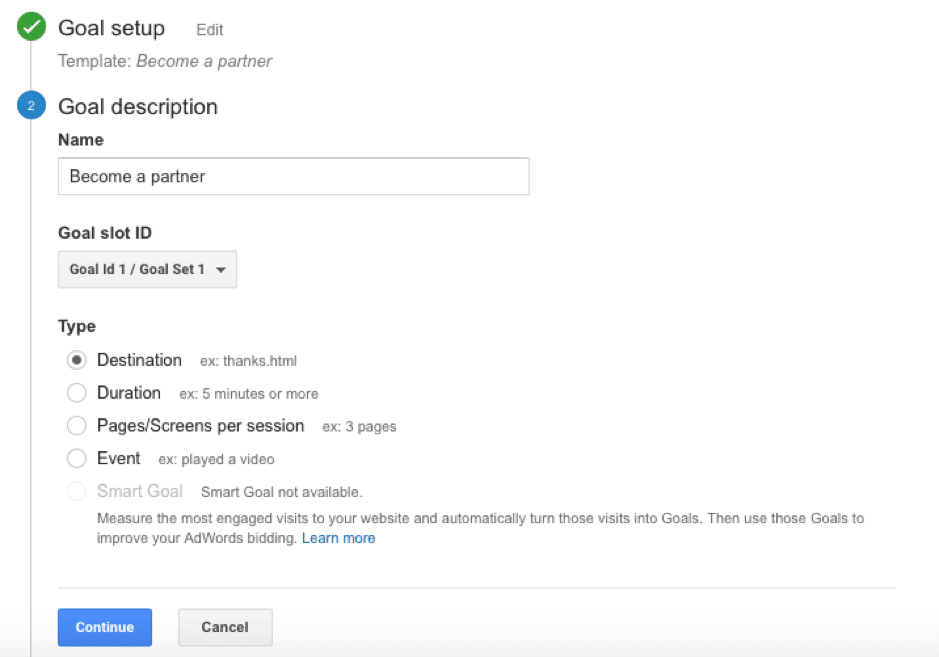
Now, the question is, how do you determine the quality of your traffic sources? How do you know which traffic sources deserve more of your attention and which don’t? In order to determine the quality of your different traffic sources, you can use your Google Analytics account. Here’s what you should look out for and which stats you should pay the most attention to:- Number of lead conversions: how many conversions are generated by a particular traffic source? This is arguably the most important metric to consider, as the number of conversions you make can ultimately determine the success of your business. In order to determine conversions, you can set up Goals in Google Analytics, to see how many people are taking a certain desired action on your website – if you’re not sure how to set up goals, you can check my guide on how to create goals in Google Analytics here
- Bounce rate: How many people are leaving your website immediately or don’t go on to any other page? If the traffic you get from a certain source tends to have a big bounce rate, then this could be a sign that your are either not targeting the right people, or that the pages you guide them to are not truly relevant to them.
- The average visit duration: how much time do visitors spend on your website? Ideally, you want your visitors to spend as much time as possible, so the more people from a certain traffic source spend on your website, the better.
- Number of pages per visit: another important metric in establishing the quality of a source is the number of pages viewed per visit; when a traffic source generates multiple pages viewed per visit, the better its quality.
The importance of having multiple traffic sources

Quality vs. Quantity: the final results

Conclusion
In order to make sure you always have a good, hopefully ever-growing stream of traffic, you need to find the right mix of quality and quantity of traffic sources. Focus most of your attention on finding and building the best sources – but don’t forget about those smaller, less successful traffic sources, because, when push comes to shove, those can help you make sure you always have traffic coming to your website. What do you think, what’s most important, quality or quantity? How many traffic sources do you have, on average and which ones are the most important? Let me know in your comments and please share:)Related: AI for Content Marketing: The 80/20 Workflow That Doesn't Get You Penalised (2026)
Related reading: How Content Marketing Generates Qualified Leads (Not Vanity Metrics).
Related reading: How to Use AI for SEO Without Getting Penalised by Google.
The short version: Chasing raw traffic numbers is a trap that burns budget and skews your data. One hundred visitors who are ready to buy will always outperform ten thousand who clicked by accident. Focus your energy on attracting the right people, not just more people.
For the adjacent case, read 5 ‘Quality over Quantity’ SEO Tips.
Frequently asked questions
What is the difference between quantity and quality traffic?
Quantity traffic refers to the sheer volume of visitors landing on your site, while quality traffic refers to visitors who match your target audience, have real intent, and are far more likely to take a meaningful action such as signing up, buying, or sharing your content.
How do I measure traffic quality?
Look beyond pageviews and focus on metrics like bounce rate, average session duration, pages per session, and most importantly conversion rate. If visitors are leaving within seconds and never converting, the traffic is not serving your business goals regardless of how impressive the volume looks.
Can I have both high quantity and high quality traffic?
Yes, but it takes time and a deliberate strategy. Building content that targets specific search intent, investing in a well-defined paid audience, and nurturing referral partnerships all help you scale traffic in a way that maintains or even improves quality over time.
Why does low-quality traffic hurt my business beyond just poor conversions?
High bounce rates and shallow engagement send negative signals to search engines, which can drag down your rankings. It also inflates your analytics, making it harder to make smart decisions, and wastes ad spend if you are running paid campaigns to audiences who were never a good fit.
Want AI doing the heavy lifting in your marketing?
I build the systems that handle the boring 80 percent, so you get your week back. Done properly, with the human kept in.
What chasing high traffic numbers actually cost us
A few years ago I ran a campaign that pulled in over 15,000 visitors in a month. I remember feeling chuffed with myself until I looked at the sales figures and saw four orders. Four. The campaign itself had cost me close to £800 in ad spend and another few hours setting everything up. When I worked out the cost per sale, it was embarrassing. That experience taught me that a big traffic number on its own tells you nothing about whether your business is actually moving forward. It just feels good on a screenshot.
Since then I have tracked cost per visitor against cost per customer for every campaign we run. It is a simple sum but most business owners skip it because the traffic report looks more impressive than the sales spreadsheet.
Building a traffic strategy around buyer intent, not reach
Reach tells you how many people saw something. Intent tells you whether those people were ready to act. A blog post that ranks for "how to fix a leaking tap" will bring in plenty of readers, but most of them want a free answer, not a plumber. A page that ranks for "emergency plumber near me" will bring in far fewer visitors, but nearly every one of them needs help right now and has their card ready.
When I plan content or ad targeting, I now sort keywords and audiences into three buckets: people just browsing, people comparing options, and people ready to buy. Most of our budget goes into the last two groups, even though they represent a smaller slice of total search volume. It is a slower way to grow a traffic number, but it has been a faster way to grow revenue.
Why traffic quality changes depending on your business stage
What counts as quality traffic is not fixed. In our first year, we needed reach more than precision, because nobody knew our name and we had to build some general awareness before we could expect anyone to convert. Chasing only high intent keywords early on left us with tiny numbers and no data to learn from.
Once we had a customer base and a clearer picture of who bought from us, the priority flipped. Volume became less useful than precision, because we already knew what a good customer looked like and wanted more of exactly that. If you are a new business reading this, do not assume that quality traffic advice written for an established company applies to you in the same way. It is worth revisiting your traffic priorities every six to twelve months as the business changes.
| Business stage | Main traffic goal | Where to focus effort |
|---|---|---|
| Just starting out | Awareness and data collection | Broad content, social shares, general keywords |
| Growing steadily | Balance of reach and conversion | Mid intent keywords, retargeting, referrals |
| Established | Precision and repeat custom | High intent search, email, existing customer channels |
Turning traffic data into decisions your team can act on
Numbers on a dashboard only help if someone does something with them. We hold a short monthly review where we look at which channels sent visitors, how many of those visitors turned into enquiries, and how many enquiries turned into paying customers. It takes about thirty minutes and has saved us from wasting money on channels that looked fine at the top of the funnel but fell apart further down.
One habit worth adopting: label your traffic sources clearly with tracking tags before you launch anything, not after. We lost a full quarter of useful data early on simply because we forgot to tag a campaign properly, and by the time we noticed, the numbers were mixed in with everything else and impossible to separate.
FAQ
Is it possible to have too much quality traffic?
Not in terms of sales, but yes in terms of capacity. If your quality traffic converts well and you cannot fulfil orders or respond to enquiries fast enough, you end up with unhappy customers rather than repeat ones. Growth still needs to match what your team can handle.
Should small businesses ignore quantity traffic completely?
No. Some quantity traffic still has value for building brand recognition, gathering feedback, and testing messaging before you commit budget to more targeted campaigns. The mistake is treating it as the main goal rather than a stepping stone.
How long does it take to see whether traffic quality has improved?
In our experience, one full sales cycle is the minimum. If your typical customer takes a month to decide, you need at least a month of data before drawing conclusions, and ideally two or three to account for normal variation.