


What are Twitter Chats?
Twitter Chats allow you to connect and engage with other users about a specific topic, and at a specific time, all tied together under one hashtag. They’re a great way of uniting people for the purpose of discussing or debating a particular subject. They’re kind of like a roundtable discussion/networking event – the only difference is that it all happens online, on Twitter.Why Twitter Chat?
Twitter Chats can have many different benefits:- Increase your brand’s exposure online: Twitter Chats are public, so whenever you engage in a Twitter Chat or even better, start your own Chat, your profile will be seen by more new users, who are hopefully interested in the niche you’re a part of.
- Increase your engagement: Twitter Chats are all about engaging with people. The more you engage, the more others will as well. So if you take part in a Twitter Chat, or start your own, make sure to be active, posting new updates and replying to tweets.
- Get new followers: With increased brand exposure and engagement, you raise your chances of getting new, targeted followers that will help you grow your business
- Talk to your customers and fans directly: Twitter has always been a great tool for facilitating business to customer relationships, and with Chats you can have even more in-depth conversations, answer any questions your customers might have, and manage your customer service, all in one place.
- Grow a solid community of engaged fans: As I mentioned earlier, Twitter Chats are a great way to engage, but they also create a sense of community when people log on regularly to participate. It can help increase brand loyalty, and help you get more brand advocates that will talk about your business and share your most important updates with their followers.
- Learn new things: Twitter chats can also be used as educational tools. People could share interesting articles they’ve read, tell you about new tools that have helped them be more productive or news in your niche that you haven’t heard of until then – whatever it is, it’s good to be prepared to take some notes.
How can you use Twitter Chats to your benefit?
- Participate in others’ Twitter Chats: Start by observing and participating in existing Twitter Chats to get a better idea of how they work and so you get the hang of it. Even if you start your own Chat, it’s still useful to participate in others, as you get to meet and engage with more new people that are interested in the same things you are.
- Start your own Twitter Chat: To start your own Twitter Chat, begin by thinking of a unique, catchy and short hashtag that you can use. Afterwards, select a time and a date that you know your audience will find convenient (check to see when your audience is most active on Twitter, for example). It’s also a good idea to create an image for your Chat that has the date and time, as well as the hashtag on it – and if it’s going to be a regular event, you can just create a template that you can update and re-use. Then, it’s all about making sure your audience knows about it: announce it on Twitter a few different times, and pin one of the tweets to the top to make sure it’s the first thing people see when they visit your profile. Make sure you also advertise it on your website and you can also add it to your email broadcasts. Once the time comes, make sure you’re prepared with plenty of things to say and share if the conversations stall.
Twitter Chats Useful Tools
Most Twitter Chats tools will help you with both setting up and hosting a Twitter Chat, as well as help you find other Chats that you can join more easily. Here are some of the best Twitter Chats tools that can help you get started:Twubs Twitter Chat

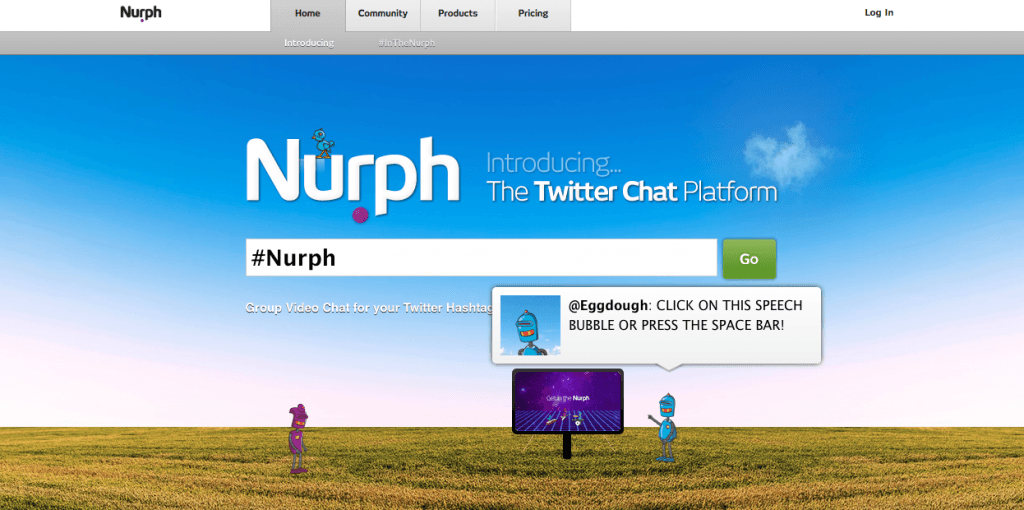
Nurph
Tchat.io
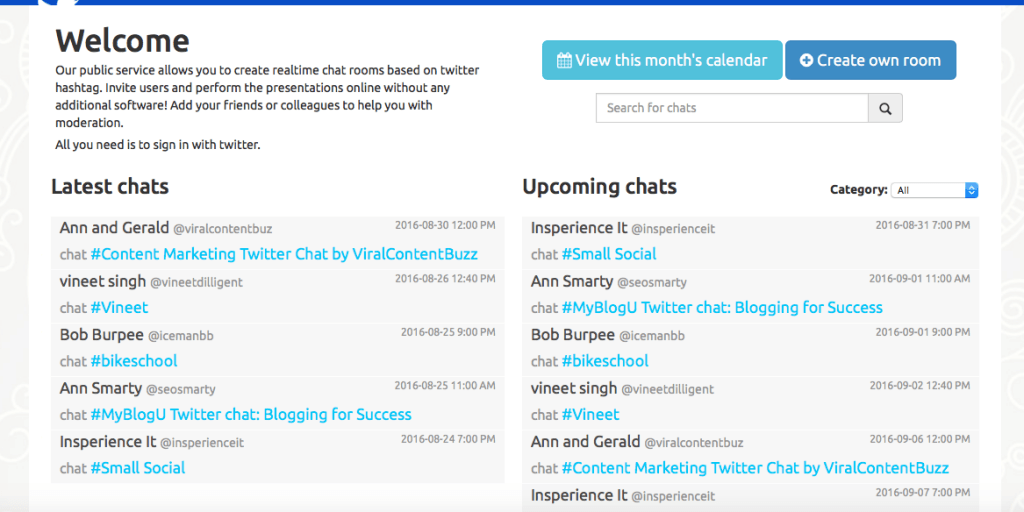
Twchat
TweetChat
Curious about Twitter Moments and what happened to them?
What I Learned After Running 47 Twitter Chats (The Numbers Nobody Shares)
After running #ContentChat, #SocialChat, and several brand-specific Twitter chats over the past few years, I can give you the honest breakdown that most "how to run a Twitter chat" guides skip entirely. The first thing you will notice is that drop-off is brutal and completely normal. In a typical one-hour chat, you will lose roughly 40% of your active participants between the 30-minute mark and the 45-minute mark. This is not failure. This is the rhythm of the format, and the hosts who panic and start over-posting at that point make the drop-off worse by exhausting the people who stayed.
The best performing question in almost every chat I have hosted is Q3, not Q1. Your first two questions warm people up and lower their guard. By question three, participants have decided they trust the room and they start sharing useful, specific answers rather than safe, generic ones. If you have a guest expert joining your chat, brief them to save their most provocative or counterintuitive point for Q3. That is where it will get the most retweets and the most follow-on conversation.
Timing matters far more than most guides admit. I tested the same chat format on Tuesday at 11am GMT, Wednesday at 1pm GMT, and Thursday at 4pm GMT over a three-month period. Thursday at 4pm consistently produced 23% more unique participants and roughly double the tweet impressions. The theory is that people are mentally wrapping up their working week and are more willing to stop, think, and engage in conversation. Tuesday mid-morning sounds sensible in theory but in practice people are buried in catch-up work from the weekend.
- Keep your chat to exactly six questions in 60 minutes. Seven or more causes the conversation threads to fragment and become impossible to follow.
- Post each question as a standalone tweet, not a reply to your previous question. Replies collapse the visibility of everything underneath them.
- Assign someone specifically to watch for first-time participants and welcome them by name within two minutes of their first post. This single action increases the chance they return the following week by a significant margin.
- Save your most controversial or surprising question for Q5. Q6 should be lighter and forward-looking so the chat ends on positive energy rather than debate.
One thing I wish someone had told me at the start: the transcript is worth more than the live event. I use a tool called Wakelet to archive every chat immediately after it ends, then I pull the three or four most insightful answers from each question and turn them into a blog post within 48 hours. That post consistently outperforms the chat itself in terms of traffic and lead generation. The chat is the engine. The content you create from it is where the business value sits.
Finally, a word on guests. Bringing in a well-known guest will spike your participant numbers for that week, often by 60 to 80%, but those extra participants rarely return the following week unless your regular community is warm and vocal enough to hold them. Build your community first for at least eight consecutive weeks before you invite a big name. If you bring the big name in too early, you will fill the room with strangers who have no reason to come back, and your regular numbers will look disappointing by comparison the week after.
Curious what X records about you? I answer does Twitter have a watch history and how to clear it. If you save images from X, read my answer to does X tell you who saved your picture.
Conclusion
Twitter Chats are very useful tools for those looking to get more engagement on Twitter, getting more followers and connecting with new people. They’re easy to use and don’t cost anything – just some time. Have you ever hosted a successful Twitter Chat? What are your tips? Let me know in the comments section, and please shareJThe short version: Twitter Chats are scheduled, public conversations on Twitter that revolve around a specific hashtag, bringing together communities of like-minded people to discuss a shared topic. They run at a set time each week and anyone can join simply by searching or following the hashtag. Hosting or joining a Twitter Chat is one of the fastest ways to grow your audience, build authority, and make genuine connections in your niche.
For the rest of the Twitter (X) questions, see my Twitter (X) guide.
Want AI doing the heavy lifting in your marketing?
I build the systems that handle the boring 80 percent, so you get your week back. Done properly, with the human kept in.
Frequently asked questions
What exactly is a Twitter Chat and how does it work?
A Twitter Chat is a live, public conversation that takes place on Twitter at a scheduled time, organised around a specific hashtag. A host asks a series of numbered questions, usually labelled Q1, Q2, and so on, and participants reply using the hashtag along with matching answers labelled A1, A2, making it easy for everyone to follow along in real time.
How do I find Twitter Chats relevant to my industry?
You can search for Twitter Chats in your niche using directories like Tweet Reports or Twubs, or simply search Twitter for keywords combined with the word "chat" to see which hashtags come up. Following industry influencers is another reliable method, as they often host or promote chats that are worth joining.
How often should a Twitter Chat be held?
Most successful Twitter Chats run on a weekly basis at the same day and time, which helps build a loyal, returning audience. Consistency is the key factor here, as participants are far more likely to show up regularly when they know exactly when to expect the conversation.
Do I need a large following to host a Twitter Chat?
No, you do not need a large following to get started. What matters most is picking a focused topic, promoting the chat in advance across your channels, and collaborating with a few respected voices in your niche who can help spread the word and bring their own audiences into the conversation.
Related reading: How Do I Pick B2B Live Chat Software for My Sales Team?.
Related reading: Is the Threads App Safe to Use for Your Business? What I Tell Clients Be.

