


- Property app design: 10 top real estate app UI designs
- # 1: Zillow
- # 2: Trulia
- # 3: Homesnap Real Estate & Rentals
- # 4: Rent.com
- # 5: Owners.com
- # 6: Realtor.com
- # 7: Redfin Real Estate
- # 8: Xome Real Estate Auctions
- # 9: LoopNet Commercial Real Estate
- # 10: Homes.com
- Takeaways
- Real estate app design FAQ
- Want more on this topic?
- Frequently asked questions
Real estate apps live or die on user interface design. A buyer searching for a home has zero patience for cluttered screens, slow filters, or confusing maps. The best real estate apps in 2026 share a small set of UI principles: clean visual hierarchy, fast filtering, beautiful property imagery, smart map integration, and saved-search workflows that feel almost effortless. This post breaks down 10 of the best real estate app UI designs in 2026, what makes each one work, and the design patterns worth borrowing if you are building or refreshing your own app.
build a real estate app, especially if you prepare yourself in advance. What do I mean? There’s no need to reinvent the wheel — you can just analyze the experience of existing market players and take the most important lessons. For example, you can develop a real estate app UI design for your own project by looking at your competitors and combining their most successful solutions. Let’s do it right now!Property app design: 10 top real estate app UI designs
# 1: Zillow
When it comes to creating your own real estate app design, this application can definitely be the source of inspiration.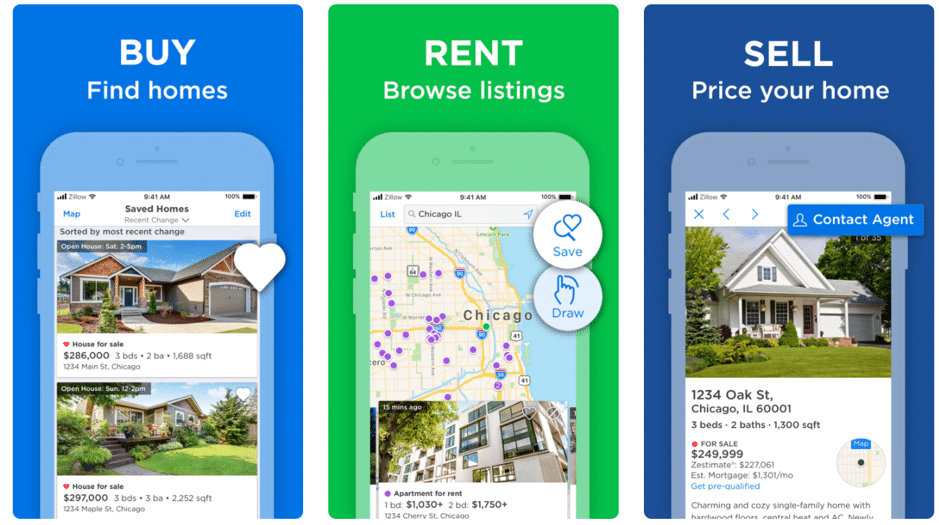
- Full-screen HD-photos and videos. Modern people want to see what they’re going to buy or rent right in the app and only if they are satisfied and have a good overall impression, to visit this house or flat.
- Wide filtering options. Despite this screen includes many options to choose from and can be hardly considered minimalistic, this is a necessary sacrifice to provide users with comprehensive info about real estate options in the area.
# 2: Trulia
Trulia is another great application, which is owned by the same corporation as Zillow but still has quite a different real estate app design. Its most popular feature is interactive map overlays that visualize how life goes in neighbourhoods: for example, where the crime rates are higher; what the average age, family status and education of locals are and so on.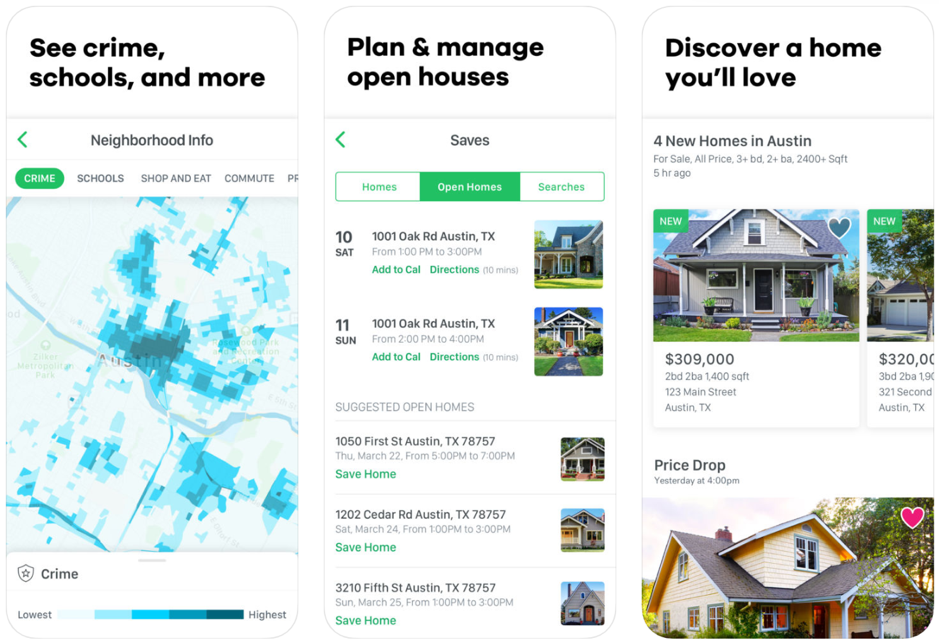
# 3: Homesnap Real Estate & Rentals
Another UI feature that became almost a “must-have” for all apps within the industry is virtual tours. There are plenty of examples of real estate app design that include 3D house tours, and the Homesnap application is one of them. Unlike photos, a virtual walkthrough allows users to feel like they’re actually inside the house: they can look around, explore how the rooms are connected and check if there’s enough space to cover their needs.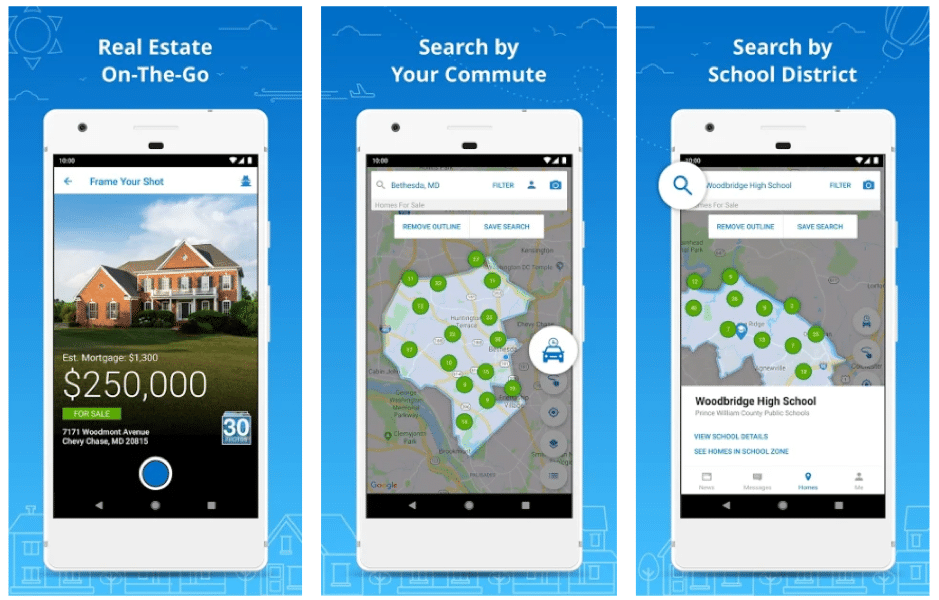
# 4: Rent.com
The 3D walkthroughs are great but how can you upgrade this feature? Take a look at the Rent.com app! Along with HD virtual tours, users are offered to check 3D floor plans. It’s a pretty good idea since it helps users to envision the space without wasting time on visits.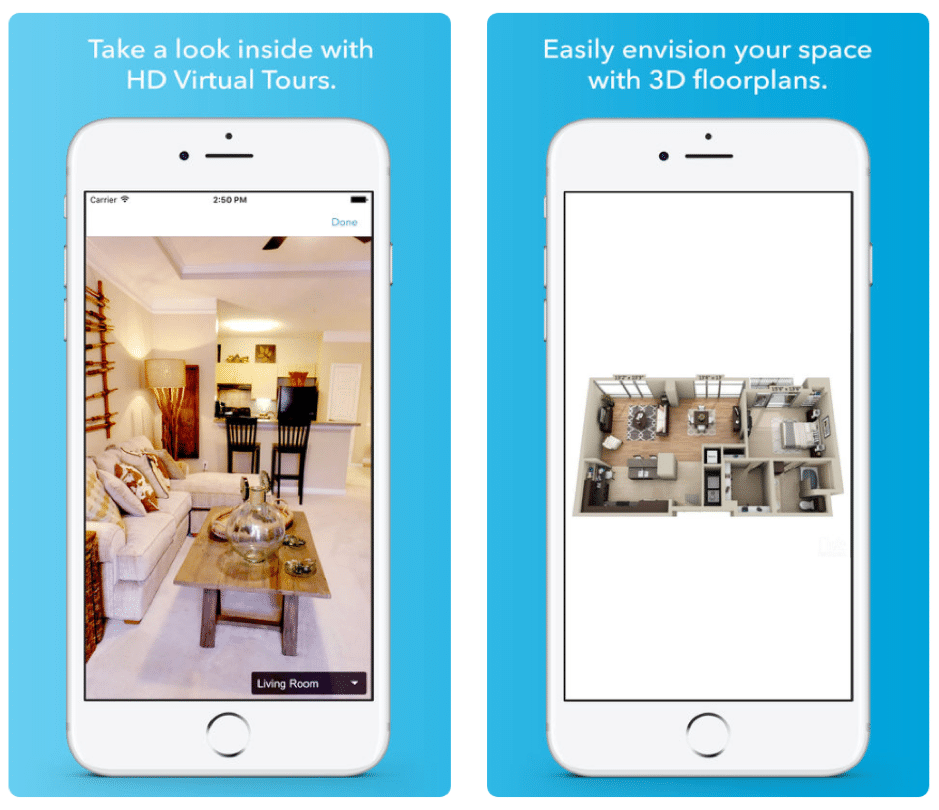
# 5: Owners.com
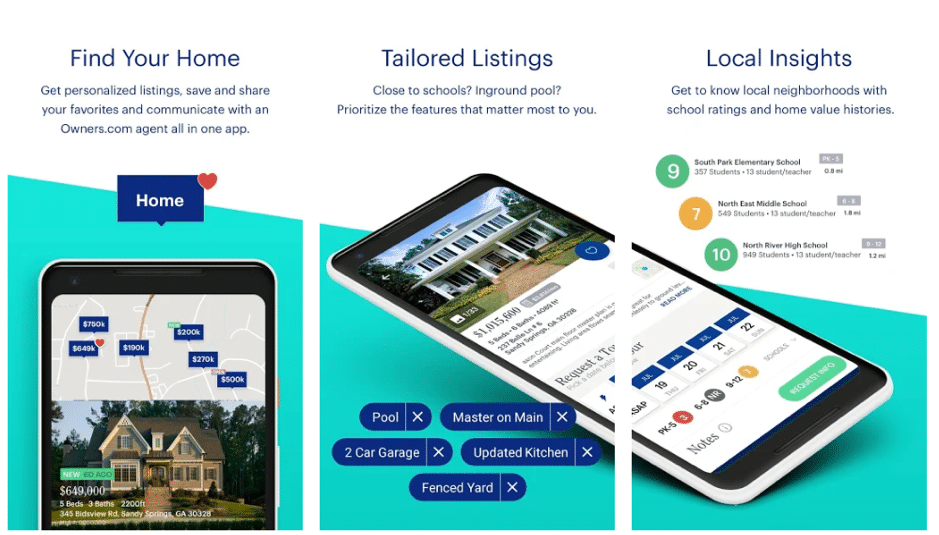
Don’t forget that you may use colours to navigate users and provide them with some useful information. Let’s see how it’s done in the Owners.com application:- The main colours of the application are white and dark blue — this is a universal combination that doesn’t distract users and looks elegant & stylish.
- The green “Request info” button at the bottom of the description screen definitely draws users’ attention, encouraging them to take an action.
- Colourful bright tags on the map (green “new”, pink “open” and red “favourite”) are also used to emphasize specific characteristics of the property.
# 6: Realtor.com
Realtor.com is another outstanding application which case you may find useful to design a real estate app of your own. This app is a great example of you can use a clean and minimalistic design. For example, to replace text, where it’s possible, with icons (just take a look at the tab bar at the bottom of the screen).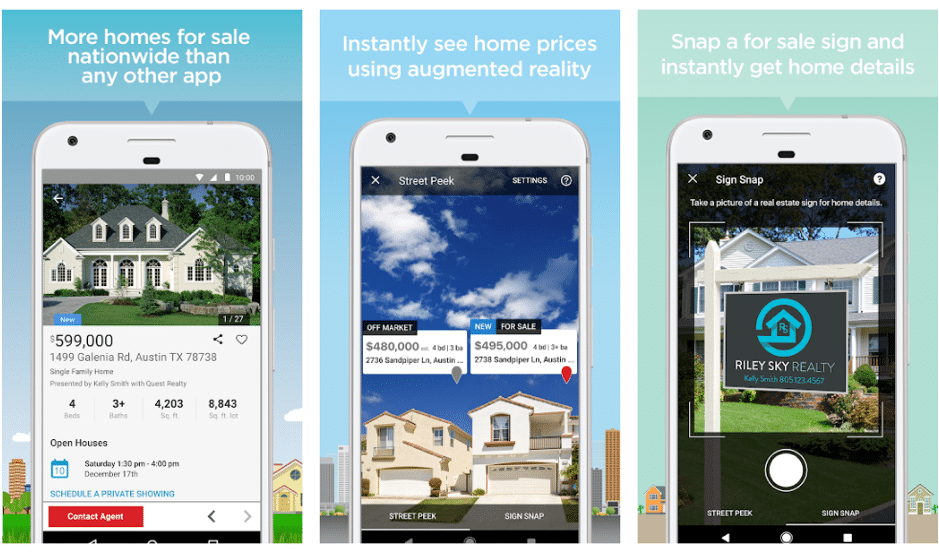
# 7: Redfin Real Estate
If you like stylish products (just like the Stormotion team!), pay attention to the Redfin application. Moreover, do you remember what we’ve just said about matching users’ expectations? Redfin is one of the examples of real estate app design that fits this description!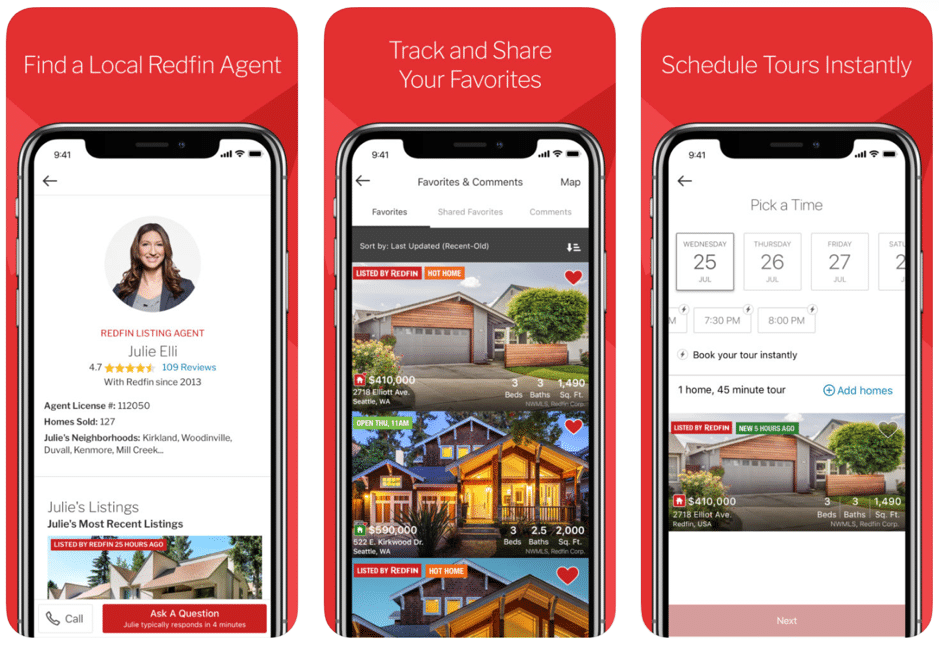
# 8: Xome Real Estate Auctions
Xome’s real estate app UI design is interesting because it greatly relies on icons and images. As an auction app, it lacks such features as virtual tours and interactive map overlays, yet, the filtering feature is better than in many other applications.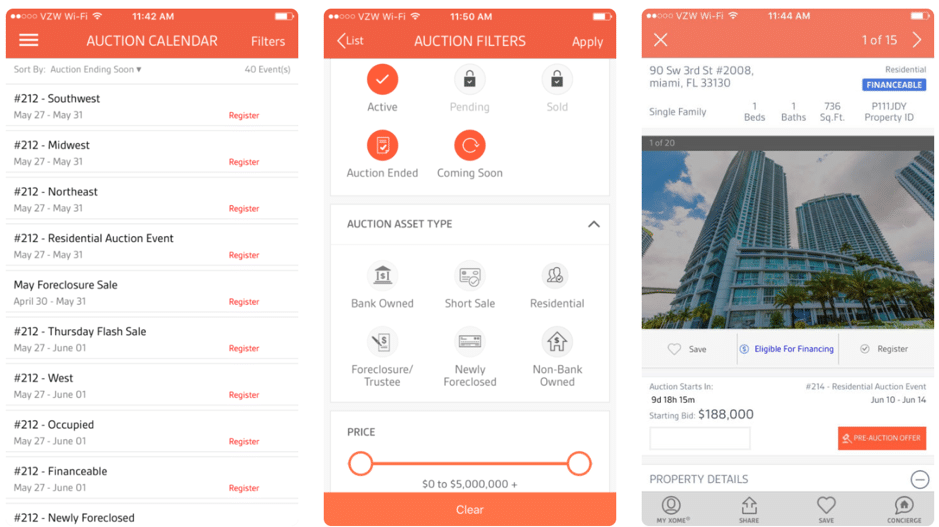
# 9: LoopNet Commercial Real Estate
You should always remember that a good application not only looks nice but also has a clear and understandable structure. That’s exactly when the LoopNet app may become a source of good ideas for you.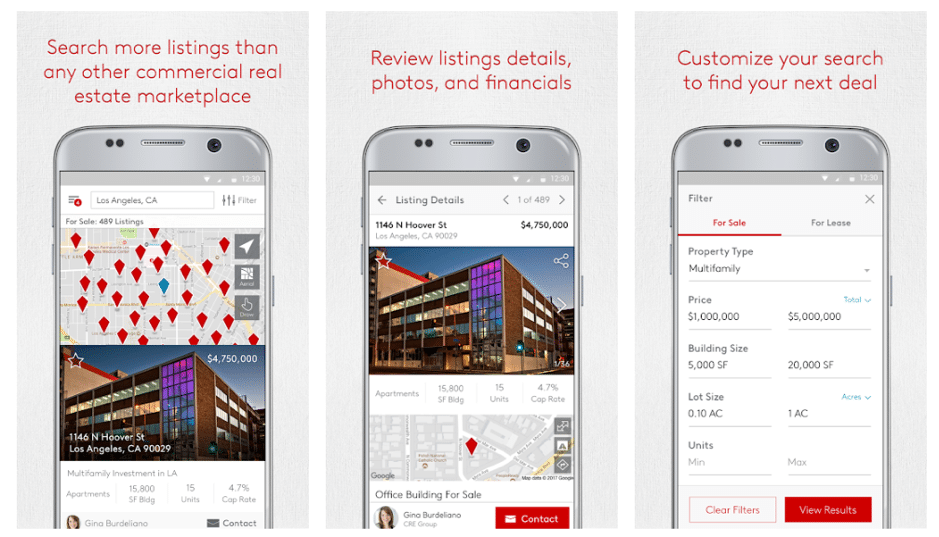
- A mainly grey & white colour scheme that doesn’t distract users.
- There’s only 1 photo on the screen at a time, which also helps to concentrate on the offer itself.
- Screens are divided into segments, making it easier to perceive the information.
# 10: Homes.com
Finally, if you check the Homes.com app, you’ll find a feature that we haven’t met so far. In this application, it’s possible to see the property images right on the map after you tap the offer’s price.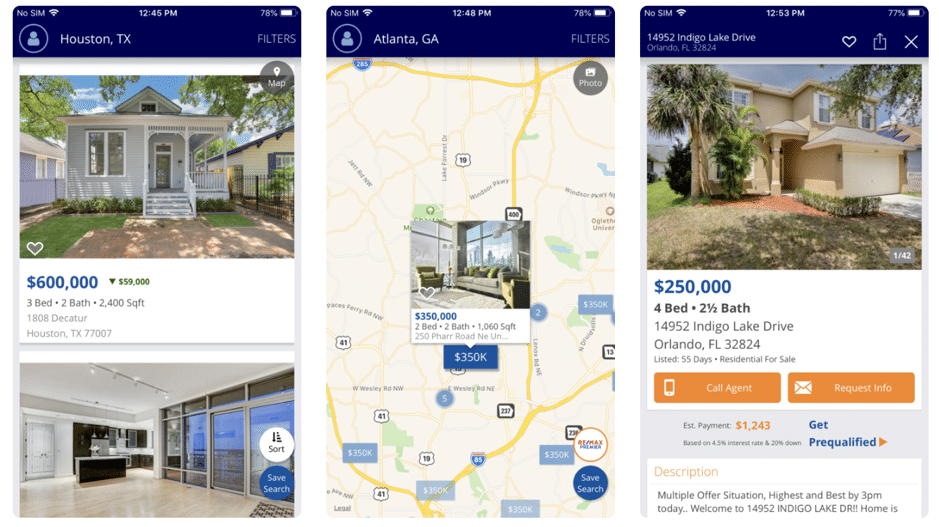
Takeaways
These were top 10 examples of real estate app design — each with some specific features that you can implement in your own application. Be creative, use HD-photos and videos, provide users with virtual tours and 3D floor plans — these are just a few tips for you. The main one is that you should always put your customers first. Good luck with your real estate app development!Real estate app design FAQ
What makes a real estate app UI design effective?
Effective real estate apps prioritise three things: fast search filtering, high-quality property photos, and intuitive map interaction. Bonus points for saved-search alerts, mortgage calculators, and one-tap agent contact.
Which real estate apps have the best UI in 2026?
Zillow, Redfin, Rightmove, Zoopla, and Realtor.com consistently rank for UI quality. Newer apps like OpenDoor and HomeLight also stand out for streamlined experiences in the iBuying and agent-matching categories.
How much does it cost to design a real estate app UI?
Professional real estate app UI design ranges from $5,000 for an MVP to $80,000+ for a full multi-platform product in 2026. Cost depends on screen count, animation complexity, and prototyping rounds.
Should a real estate app support both buyers and sellers?
It depends on your strategy. A focused buyer-only app often outperforms a dual-purpose product because the user journeys are different. If you do build for both, separate the entry flows clearly so each user feels the app was made for them.
Want to go deeper? Read these next:
- Beyond Chatbots: How AI Agents Are Reshaping Business Work In 2026
- Focus That Delivers: Setting Quarterly Priorities That Actually Move The Business
- The Client Doesn’t Set the Price, the Market Does, According to Carlos Alex Rozwadowski
Want more on this topic?
Related reading: GEO for Real Estate Agents.
Want AI doing the heavy lifting in your marketing?
I build the systems that handle the boring 80 percent, so you get your week back. Done properly, with the human kept in.
The short version: Great real estate app UI design comes down to clear property visuals, simple search and filter tools, and a smooth path from browsing to booking a viewing. The best examples make map views, saved listings, and agent contact options feel effortless rather than cluttered.
Related: the real estate page.
Frequently asked questions
What makes real estate app UI design effective?
Effective design puts high-quality images and key property details front and center, keeps search filters intuitive, and reduces the number of taps needed to go from listing to inquiry. Clean layouts and fast load times matter just as much as visual polish.
Which features should a real estate app prioritize?
Map-based search, saved favorites, mortgage calculators, virtual tour support, and direct messaging with agents are among the most valuable features. Prioritizing these helps users move confidently from casual browsing to serious inquiry.
How important are visuals in real estate app design?
Visuals are central since buyers and renters make quick judgments based on photos and layout clarity. Apps that support high-resolution images, floor plans, and video walkthroughs tend to keep users engaged longer.
Can good UI design improve conversion rates for property apps?
Yes, a well-structured interface reduces friction at every step, from search to contact, which directly supports higher inquiry and conversion rates. Small improvements like clearer calls to action or simplified forms often produce noticeable results.

