Marketing Automation: A Powerful Weapon You’re Not Using Properly
Some people seem to assume that setting up marketing automation is like painting a shed; that it’s a one-time job that, once completed, will last for years. Actually, marketing automation is more like raising a kid; it requires careful and regular nurturing if it’s to flourish. Don’t let that analogy deter you however, from either marketing automation or parenthood, as both can be extremely rewarding.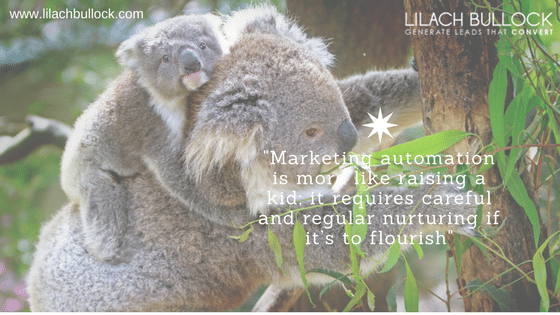
The short version: Most businesses invest in marketing automation tools but fail to use them strategically, missing out on genuine connections with their customers. The real power comes from combining automation with personalization, segmentation, and clear business goals rather than just setting up generic workflows.
The Abandoned Cart Sequence That Recovered 34% of Lost Sales for One of My Clients
Most marketers set up a single abandoned cart email, send it 24 hours after the basket is left, and call it a sequence. That is not a sequence. That is one email wearing a trench coat pretending to be a strategy. When I worked with a mid-sized e-commerce client selling premium skincare products, their single-email recovery rate was sitting at a dismal 4.2%. We rebuilt the automation entirely over three weeks, and within 90 days the recovery rate climbed to 34%. Here is exactly what changed.
The new sequence ran across five touchpoints. The first email fired at 45 minutes, not 24 hours, and it contained zero selling language. Just a warm, human-sounding note confirming the items were still reserved and asking if there had been a technical problem at checkout. The second email went out at six hours and introduced a single piece of social proof, specifically a real customer review directly about the exact product left in the basket, pulled dynamically by the automation. The third email at 24 hours addressed the most common purchase objection for that product category, which we identified by mining their customer service chat logs. The fourth email at 48 hours introduced a time-limited offer. The fifth and final email at 72 hours was a soft goodbye, telling the subscriber the reservation was expiring. That last email alone recovered 11% of the total reclaimed sales.
The detail most guides skip entirely is the objection-handling email, and it is where the real money sits. You cannot write it generically. You have to dig into your support tickets, your live chat transcripts, your product reviews, and find the actual words your customers use when they hesitate. For this client, the hesitation was not price. It was uncertainty about skin type compatibility. Once the automation spoke directly to that fear with specific, confident information, the conversion rate on that single email was 8.4%. No discount required.
- Pull your last 50 customer service conversations and write down every question asked before a purchase
- Check your one-star and two-star reviews for language about pre-purchase doubt, not post-purchase regret
- Run a quick exit-intent survey on your checkout page for two weeks asking one question: "What nearly stopped you buying today?"
- Use those exact phrases, not marketing rewrites of them, in your third email
One more thing worth saying honestly: personalisation in this context does not mean using someone's first name. That is table stakes and it impresses nobody in 2024. Real personalisation means the email references the specific product category, speaks to the demonstrated hesitation pattern for that category, and adjusts tone based on whether this person is a returning customer or a first-time visitor. Your automation platform almost certainly supports all of this with conditional logic blocks. Most people set them up once for a generic case and never revisit them. Schedule a quarterly review of every active automation you have running. Treat them like living documents, not set-and-forget infrastructure.
The uncomfortable truth is that most abandoned cart automations are polite reminders dressed up as strategy. Buyers do not abandon carts because they forgot. They abandon because something stopped them. Your automation's entire job is to find that obstacle and remove it, not to nudge them with a pretty picture of what they left behind.
Related: the marketing automation page.
Frequently asked questions
What's the biggest mistake people make with marketing automation?
They treat it as a "set and forget" solution. People create email sequences and campaigns, then abandon them without testing, refining, or analyzing what's working. Automation is a tool that requires ongoing attention and optimization to deliver results.
How do I know if my marketing automation is working?
Track metrics that matter to your business: open rates, click-through rates, conversion rates, and most importantly, revenue generated. Set clear goals before you automate anything, then measure whether your campaigns are moving customers closer to those goals.
Want AI doing the heavy lifting in your marketing?
I build the systems that handle the boring 80 percent, so you get your week back. Done properly, with the human kept in.
Can marketing automation work for small businesses?
Absolutely, but you need to start small and focused. Pick one specific problem to solve - like nurturing leads or re-engaging inactive customers - rather than trying to automate everything at once. This helps you learn what works before scaling up.
What's the difference between marketing automation and spam?
Relevance and permission. Automation is powerful when you send the right message to the right person at the right time based on their behavior and interests. If you're blasting the same message to everyone, you're just automating spam.
Related reading: I Called My Own Business Pretending to Be a Customer to Test an AI Recep.
Related reading: The AI Receptionist Test Every Small Business Owner Should Run Before La.
Related reading: Why Your AI Still Writes Like Everyone Else's (And the 45-Minute Fix Tha.
Related reading: What Are the Stages of a Sales Funnel? A Breakdown With Real Numbers.